Floating Covers for Process Industries: Evaporation, Algae, and Odor Control in Storage and Process Ponds
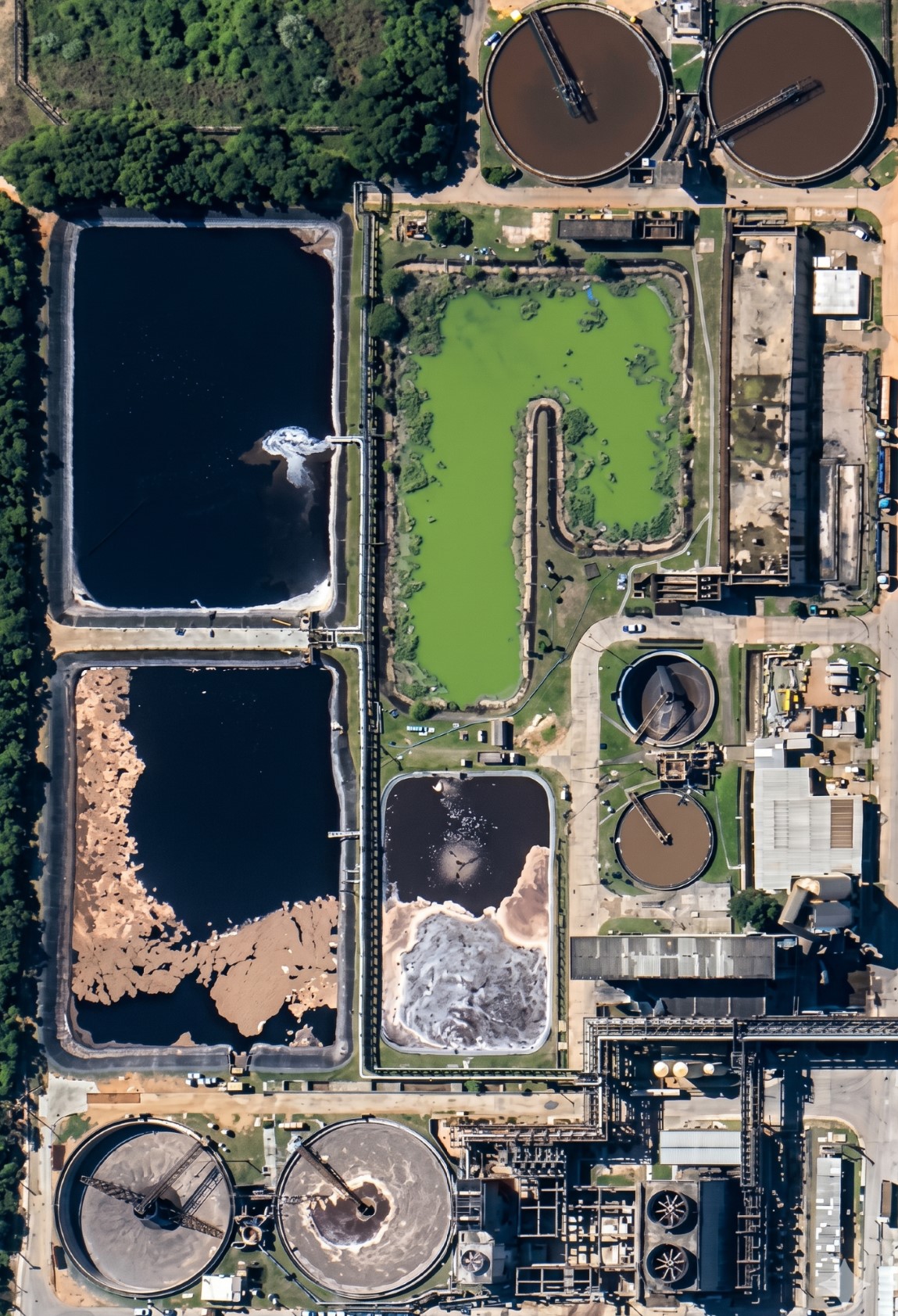
From food and beverage processing to pulp and paper to energy generation, process industries depend on water and on the storage and process ponds that hold it. Those open ponds lose water to evaporation, grow algae that disrupt operations and water quality, and emit odors that reach nearby communities. A modular floating cover addresses all three at the surface, with one installation.
This article looks at how floating covers apply across the broad family of process industries.
The common thread: open ponds at the surface
Process industries are diverse, but they sharea recurring feature: water held in open storage and process ponds. A food processor holds wash, cooling, and process water; a pulp and paper mill manage sprocess and effluent ponds; an energy facility maintains cooling reservoirs and storage basins; a beverage plant holds process and wastewater. In every case, the open surface is where three problems converge: evaporation, algae and odor, and where a single floating cover can intervene without re-engineering the process itself.
Controlling evaporation in storage and process ponds
Water that evaporates from a process pond is water the facility must replace, at the cost of sourcing, pumping, and often treating make-up water to process-quality standards. In water-stressed regions or under tightening extraction permits, that replacement cost and the regulatory and reputational exposure that comes with high water use rises year on year. A floating cover reduces evaporation by shading the surface, lowering surface temperature, and limiting the wind-driven exchange of saturated air at the interface, keeping water in the process loop and reducing the facility's freshwater draw. For operations measured on water-use efficiency, reporting against sustainability targets, or competing with agricultural and municipal users for a shared basin, this is both a cost saving and a sustainability credential.
Suppressing algae witout chemicals
Algal growth in process and storage ponds is more than cosmetic. Algae foul intakes, screens, strainers, and filters; swing pH and dissolved oxygen over the day; degrade water quality for the next process step; increase maintenance downtime; and in some applications introduce taste, odor, or contamination concerns that are unacceptable downstream. Chemical control is ongoing, costly, requires careful dosing and monitoring and is sometimes incompatible with the water's downstream use, particularly in food and beverage contexts where chemical residues are tightly controlled.
A floating cover blocks the sunlight algae need to photosynthesize, suppressing growth physically rather than chemically. For process water that feeds sensitive operations, eliminating algae at the source protects water quality, reduces the maintenance burden of cleaning fouled equipment, and removes an entire chemical-handling program from the plant's operations. The benefit is both the cost avoided and the simplification ofoperations.
Cutting odor emissions to nearby communities
Many process ponds, particularly effluent andprocess-water ponds in food, beverage, and pulp operations, emit odors as organic material breaks down at the surface under anaerobic or transitional conditions. As communities expand toward industrial sites that were once isolated, odor becomes a community-relations and regulatory issue that can constrain a facility's operations or expansion. Because odor escapes at the surface, covering that surface is the most direct control: a high-coverage modular system can cut surface odor emissions substantially, by up to 90% infavorable configurations, before they reach the fence line, addressing the problem passively rather than with energy-intensive enclosure and scrubbing.
Why modular HDPE for process industries
The diversity of process-industry ponds is exactly why modular systems fit so well:
• Adaptable geometry: modules conform to ponds of any shape and size without custom fabrication.
• Chemical compatibility: HDPE tolerates the varied chemistry of process and effluent water across industries, from food-grade to mill effluent.
• Level tracking: the modular field floats with changing water levels through the operating cycle.
• Selective access: modules can be removed for sampling, maintenance, or process access and replaced.
• Individual serviceability: a damaged module is replaced without compromising the whole field.
• Service life:UV-stabilized HDPE is built for years of continuous outdoor exposure.
A flexible solution for varied needs
Because process industries vary so widely, the right cover configuration depends on the specific pond and its priorities. A food processor may lead with algae control to protect water quality and remove a chemical program; a pulp mill may lead with odor management to address community pressure; an energy facility may lead with evaporation savings on a large cooling reservoir. The strength of a modular floating cover is that, whatever the lead benefit, the other two come along in the same installation, so the facility solves its primary problem and gets the others at no additional capital cost.
Building the case
The process-industry business case combines reduced make-up water cost, lower maintenance and downtime from algae-free equipment, eliminated chemical-treatment programs, and odor control that protects the facility's regulatory standing and community relations. Because the same cover delivers all of these, the case rarely rests on a single benefit, it is the combination, applied to the specific ponds where it matters most, that makes floating covers compelling for process operations.
Putting numbers to the decision
The process-industry evaluation is driven by whichever problem leads at the specific facility. Where evaporation leads, the recovered water is valued at its full make-up cost, including treatment to process quality. Where algae leads, the value is the eliminated chemical program plus the maintenance hours and downtime recovered from no longer cleaning fouled equipment. Where odor leads, the value is the avoided cost ofan enclosure-and-scrubber alternative and the protection of the facility's licence to operate. Because the same cover delivers all three, the secondary benefits accrue at no additional capital cost once the lead benefit justifies the project.
A supplier who models the specific ponds, their geometry, chemistry, process role, and access needs, turns these linesinto a concrete, facility-specific business case.
Take the next step
If your facility manages storage or process ponds and you want to control evaporation, suppress algae without chemicals,and cut the odor that reaches your neighbors, learn more about how modular floating covers are applied across process industries.
→ Learn more about floating covers for process industries: https://www.covex-cover.com/process-industries