Floating Covers in Mining: How a Modular Barrier Recovers Water, Retains Heat, and Protects Wildlife
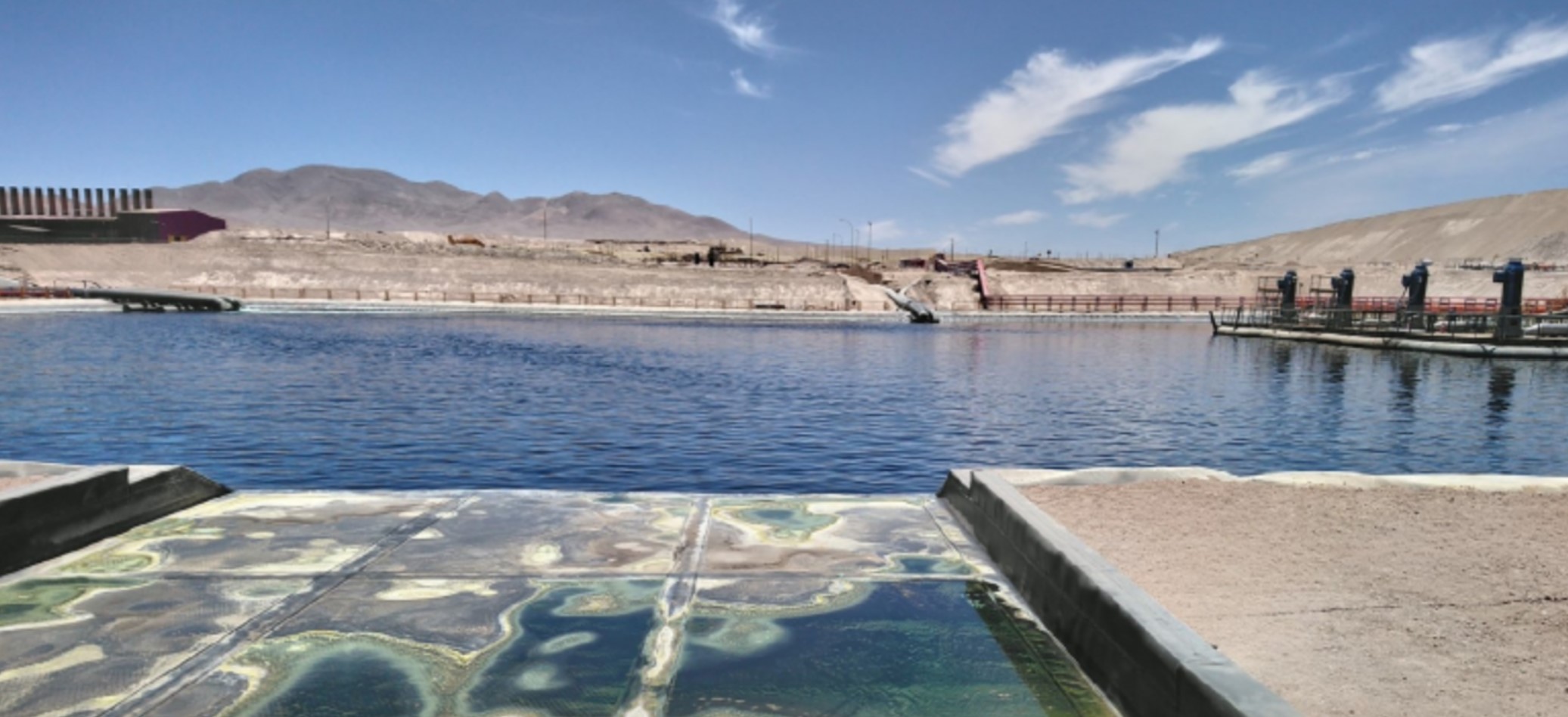
Water is the quiet constraint on almost everymining operation. Whether you run a copper concentrator in the Atacama, a goldheap-leach pad in Nevada, or a process circuit at altitude in the Andes, thevolume of water you can secure, reuse, and account for often decides how muchore you can move. And yet across the industry, enormous volumes of that watersit exposed to the open air in process ponds, raw-water reservoirs, and storagebasins, evaporating into the sky, growing algae, and drawing birds that noenvironmental team wants to see near a cyanide or acidic solution.
Modular floating covers address all threeproblems at once, with a single physical layer placed on the water surface. Thisarticle explains how they work, where they deliver the most value in a miningoperation, and what to look for when evaluating them.
The evaporation problem is bigger than it looks
In arid mining regions,evaporation losses from an uncovered pond can reach 2,000 to 3,500 millimetersper year. For a one-hectare pond, that is on the order of 20 to 35 millionliters lost annually, water you paid to pump, treat, or buy, vanishing withoutdoing any work. In regions where mines operate under strict extraction permitsor compete directly with agricultural and community users for the same basin,every cubic meter recovered has both a hard cost and a social-licensedimension.
A floating cover works byphysically separating the water surface from the dry, moving air above it.Evaporation is driven by the vapor-pressure gradient between the water surfaceand the air, and by wind that carries saturated air away and replaces it withdry air. A cover interrupts both mechanisms: it shades the surface, loweringsurface temperature and the vapor pressure that drives evaporation, and ittraps a thin saturated boundary layer that the wind can no longer strip away.By blocking these pathways, a high-coverage modular system can cut evaporationby up to 90% or more depending on configuration and climate. The water youwould have lost stays in the circuit, available for reuse.
Heat retention in leaching circuits
Many hydrometallurgicalprocesses are temperature-sensitive. Leaching kinetics slow as solutiontemperature drops, and in high-altitude or cold-climate operations, overnightheat loss from exposed ponds can measurably reduce recovery efficiency. Thedominant pathway for that heat loss is, again, the surface: evaporative coolingand radiative loss both happen at the water-air interface.
A floating cover acts as aninsulating blanket, reducing both the evaporative and the radiative heat lossfrom the solution surface. Keeping pregnant or barren leach solutions warmerfor longer can translate directly into improved metallurgical performance, faster kinetics, higher recovery, or the ability to maintain targettemperatures with less supplementary heating. This is a benefit that is easy tooverlook when covers are framed only as a water-saving measure, but fortemperature-sensitive circuits it can be the larger of the two values.
Wildlife exclusion and the auditability question
Open process water is anattractant. Birds and other wildlife landing on solution ponds is a recurringcompliance and reputational risk, particularly where solutions contain cyanide,sulfuric acid, or dissolved metals. Bird mortality events on mining ponds havetriggered regulatory action and reputational damage across the industry.Netting is one answer, but it sags, requires structural support across largespans, does nothing about evaporation or algae, and can itself entanglewildlife if poorly maintained.
A modular floating coverprovides a continuous physical barrier across the surface. Crucially formining, a well-engineered modular system is auditable: coverage ismeasurable, the installation is documented, and the barrier's presence can bedemonstrated to regulators and to community stakeholders as a concrete,verifiable commitment rather than a promise. In jurisdictions where evaporationreduction and water stewardship are written into environmental commitments orcommunity water agreements, that auditability matters as much as the physics. Acover you can point to, quantify, and show in an audit is worth more than ameasure that exists only on paper.
Why modular HDPE rather than a single floating membrane
Large single-sheet floatingmembranes are difficult to install on irregular ponds, hard to repair, andvulnerable to wind uplift and ballast failure. Modular HDPE systems, interlocking units that float independently and self-arrange across the surface, offer practical advantages in a mining context:
• Irregular geometry: modules conform to ponds ofany shape, including those with islands, inlets, pump barges, or fluctuatingwater levels.
• Level tolerance: as water rises and falls withthe operation, the modular field rises and falls with it, maintaining coveragewithout re-tensioning or re-ballasting.
• Repairability: a damaged module is removed andreplaced individually; there is no single point of failure across the wholesurface.
• Chemical resistance: HDPE tolerates a wide rangeof pH and dissolved-metal conditions common in mining solutions, from acidicraffinate to alkaline process water.
• Logistics: modules ship compactly and aredeployed by hand or with minimal equipment, which matters at remote sites farfrom heavy machinery and skilled installation crews.
• UV and service life: properly formulated HDPEwith UV stabilization withstands years of intense high-altitude or desert solarexposure.
Where covers pay back fastest
In practice, the strongestbusiness cases in mining tend to be process-water and raw-water reservoirs inarid climates, where evaporation losses are large and replacement water isexpensive or constrained. Leach-solution ponds add the heat-retention benefiton top. And anywhere wildlife exclusion is a permit condition, the cover earnspart of its keep on compliance alone. The most compelling cases stack two orthree of these benefits on the same pond, water recovery plus heat retentionplus wildlife exclusion, which is exactly where the economics become decisive.
Putting numbers to it
Before specifying a system, asound evaluation models annual evaporation for the specific pond using localpan-evaporation data, applies a realistic coverage-efficiency factor based onthe proposed coverage ratio, and values the recovered water at its truemarginal cost , not just the pumping cost, but the cost of the next cubic meterthe operation would otherwise have to secure, whether that is desalinatedwater, trucked water, or water bought from another rights holder. For manyarid-zone mines, that marginal cost is high enough that the cover pays back ina small number of years on evaporation savings alone, with heat-retention andcompliance benefits effectively free on top.
A rigorous evaluation alsoaccounts for the operating reality of the pond: the coverage ratio actuallyachievable around inlets, outlets, and pump infrastructure; the wind exposureof the site; and the maintenance regime over the cover's service life. A supplierwho works through these specifics with your team will give you a defensiblenumber rather than an optimistic headline figure.
Common questions
Will the cover interfere withpumping or pond operation?
A modular field is designed around the pond'sinfrastructure, leaving access where it is needed and floating freelyelsewhere.
What about wind?
Modular systems distribute wind load acrossmany independent units rather than concentrating it on a single tensionedsheet, which improves resilience.
How long does it last?
Service lifedepends on the HDPE formulation and the chemistry of the water, but properlyspecified covers are designed for years of continuous service.
Take the next step
If you operate process ponds,leach circuits, or raw-water reservoirs and want to recover water, retain heat,and put an auditable barrier between your solutions and the wildlife abovethem, learn more about how modular floating covers are applied in miningconditions.
→ Learnmore about floating covers for mining: https://www.covex-cover.com/mining