Odor, Algae, and Evaporation: How Floating Covers Solve Three Problems at the Water-Air Interface
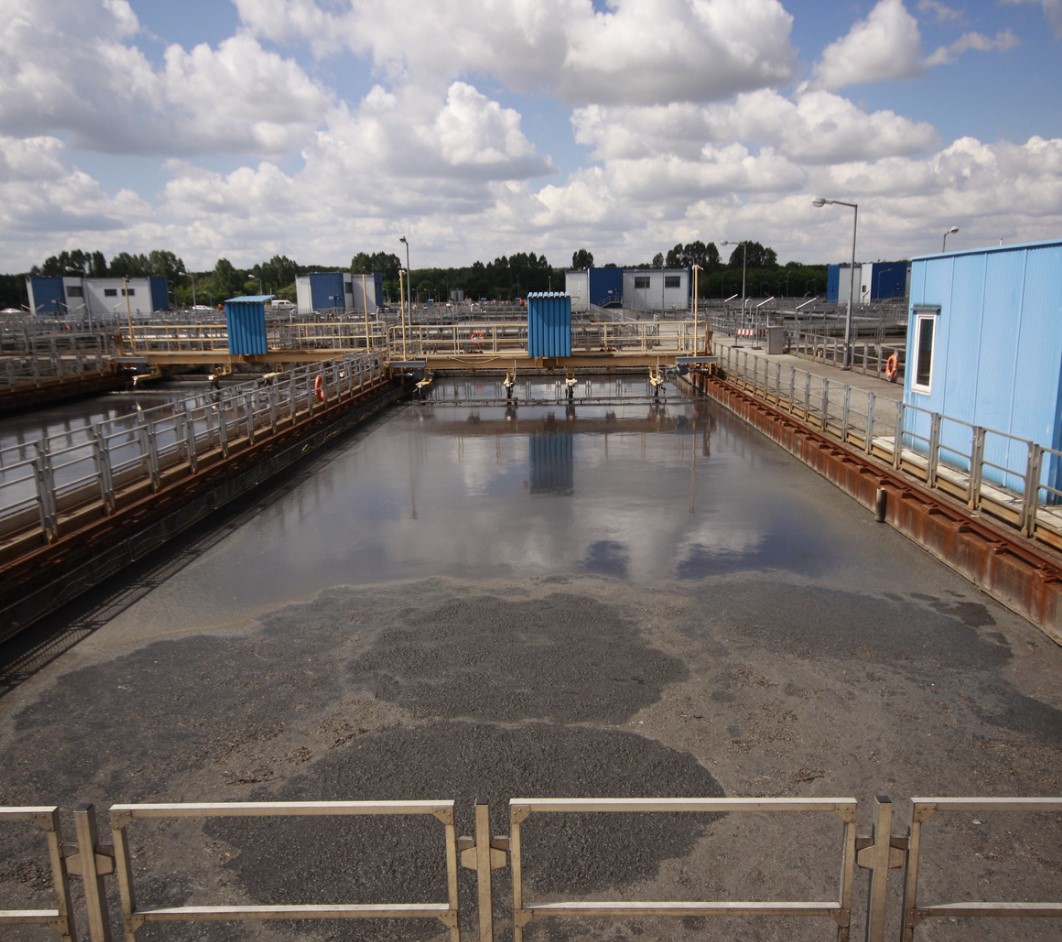
Wastewater treatment plants live and die by what happens at the surface of their lagoons and ponds. The interface between water and air is where odor escapes, where sunlight drives algae, and where treated water destined for reuse slowly evaporates away. A floating cover sits precisely on that interface , which is why a single modular system can address problems that would otherwise need three separate interventions.
This article looks at how floating covers workin a wastewater context, lagoon by lagoon, and why sealing the surface is so effective.
Odor starts at the surface, so control it there
Odor complaints are one of the most persistent and politically sensitive problems a treatment plant faces. As population sexpand toward facilities that were once on the urban edge, the buffer between the plant and its neighbors shrinks, and odor that was tolerable on open land becomes a community grievance and, increasingly, a regulatory obligation with real enforcement behind it.
The chemistry of wastewater odor, hydrogen sulfide, volatile fatty acids, mercaptans, ammonia, and other reduced compounds, is driven by anaerobic activity, and those compounds volatilize at the water surface. Capturing or scrubbing odor after it has been released into the air is energy-intensive and expensive: it requires enclosure, ducting, fans, and chemical or biological scrubbers, all of which consume power and demand maintenance. Preventing the release in the first place is far more efficient.
A floating cover reduces the open water-air interface, physically limiting the area through which volatile compounds can escape. By sealing much of the surface, a high-coverage modular system can cut surface odor emissions substantially by up to 90% in favorable configurations, directly at the source, before the odor ever reaches the fence line. For plants under regulatory or community pressure on emissions, this surface-first approach is often the most cost-effective path, addressing the problem with a passive physical barrier rather than an energy-hungry treatment system.
Cutting the light that feeds algae
Algal blooms are the second chronic surface problem. In facultative and maturation lagoons, in reuse-storage ponds, and anywhere treated water is held, sunlight plus nutrients equals algae. Blooms clog screens and filters, swing dissolved-oxygen and pH levels over the diurnal cycle, degrade effluent quality, raise suspended solids in the discharge, and in storage applications can foul downstream irrigation lines and emitters.
Algae need light to photosynthesize. A floating cover blocks the sunlight that drives that photosynthesis, suppressing algal growth without chemicals. This is particularly valuable for treated-waterstorage intended for reuse, where chemical algaecides may be undesirable or prohibited and where consistent water quality is essential for the next stage, whether that is agricultural irrigation, industrial reuse, aquifer recharge, or compliant discharge. Removing the light removes the bloom at its root, rather than fighting it reactively with treatment.
Protecting treated waterheld for reuse
Water reuse is no longer a niche practice; in water-stressed regions it is becoming standard, and in some it is mandated. But treated water held in open storage is exposed to the same evaporation losses as any other surface water and to recontamination by algae, windblown dust, and wildlife. Covering reuse-storage ponds protects the investment already made in treating that water: it limits evaporative loss, keeps the water dark and algae-free, and maintains the quality the downstream user is counting on. Every cubic meter of treated water lost to evaporation or degraded by algae is a cubic meter of treatment effort wasted.
Why modular floating covers suit treatment plants
Treatment lagoons present specific challenges: fluctuating levels, the need for occasional access, biological processes thatmust continue, and surfaces that are anything but pristine. Modular HDPE systems are well suited because:
• They track water level. As a lagoon fills and draws down with flow and load, the modular field floats with it, keeping coverage continuous.
• They allow partial access. Modules can be removed from a zone for sampling, maintenance, aeration access, or desludging, then replaced.
• They are chemically robust. HDPE resists the corrosive, biologically active environment of wastewater over a long service life.
• They scale to any shape. Lagoons are rarely simple rectangles; modular fields conform to whatever geometry exists, around baffles, inlets, and outlets.
• They are individually serviceable. No single tear compromises the whole cover, unlike a continuous tensioned membrane.
A note on aeration and biological processes
Not every lagoon should be fully sealed. Aerobic processes depend on oxygen transfer at the surface, and a complete seal over an aerated or facultative pond can interfere with treatment by limiting reaeration. The right design balances coverage against process needs full coverage where the goal is odor, algae, evaporation control, or reuse-water protection, and engineered partial coverage where biological oxygen demand mustbe respected. A good supplier works with your process engineers to understand the treatment objective of each lagoon rather than simply maximizing coverage everywhere. Getting this balance right is the difference between a cover that solves problems and one that creates them.
Building the case
The strongest wastewater business cases usually begin with odor because odor carries regulatory and community costs that are hard to quantify but impossible to ignore and then add algae control and evaporation savings as stacked benefits on the same ponds. Reuse-storage protection is increasingly the deciding factor in regions where every cubic meter of treated water is destined for a second life. When the same passive barrier addresses an odor mandate, eliminates a chemical algaecide program, and conserves reuse water, the combined value is what closes the decision.
Putting numbers to the decision
A sound wastewater evaluation starts with thespecific problem driving the project. For odor, that means quantifying the regulatory or community exposure, the cost of complaints, enforcement risk, or the alternative capital and operating cost of an enclosure-and-scrubber system that the cover displaces. For algae, it means valuing the chemical algaecide program eliminated and the maintenance hours recovered from no longer cleaning fouled screens and filters. For evaporation and reuse protection, it means valuing the treated water conserved at its full replacement cost.
In most cases the cover is justified by the lead problem alone, with the other two benefits effectively free. A supplier who models the specific lagoons, their coverage ratio, their process role, and their access needs, gives you a defensible figure rather than a generic claim.
Take the next step
If your plant is fighting odor complaints, recurring algal blooms, or evaporation and recontamination of treated waterheld for reuse, a modular floating cover lets you address all three at the surface where they begin.
→ Learn more about floating covers for wastewater treatment: https://www.covex-cover.com/wastewater