Solar Plants Are Built Exactly Where Water Disappears Fastest
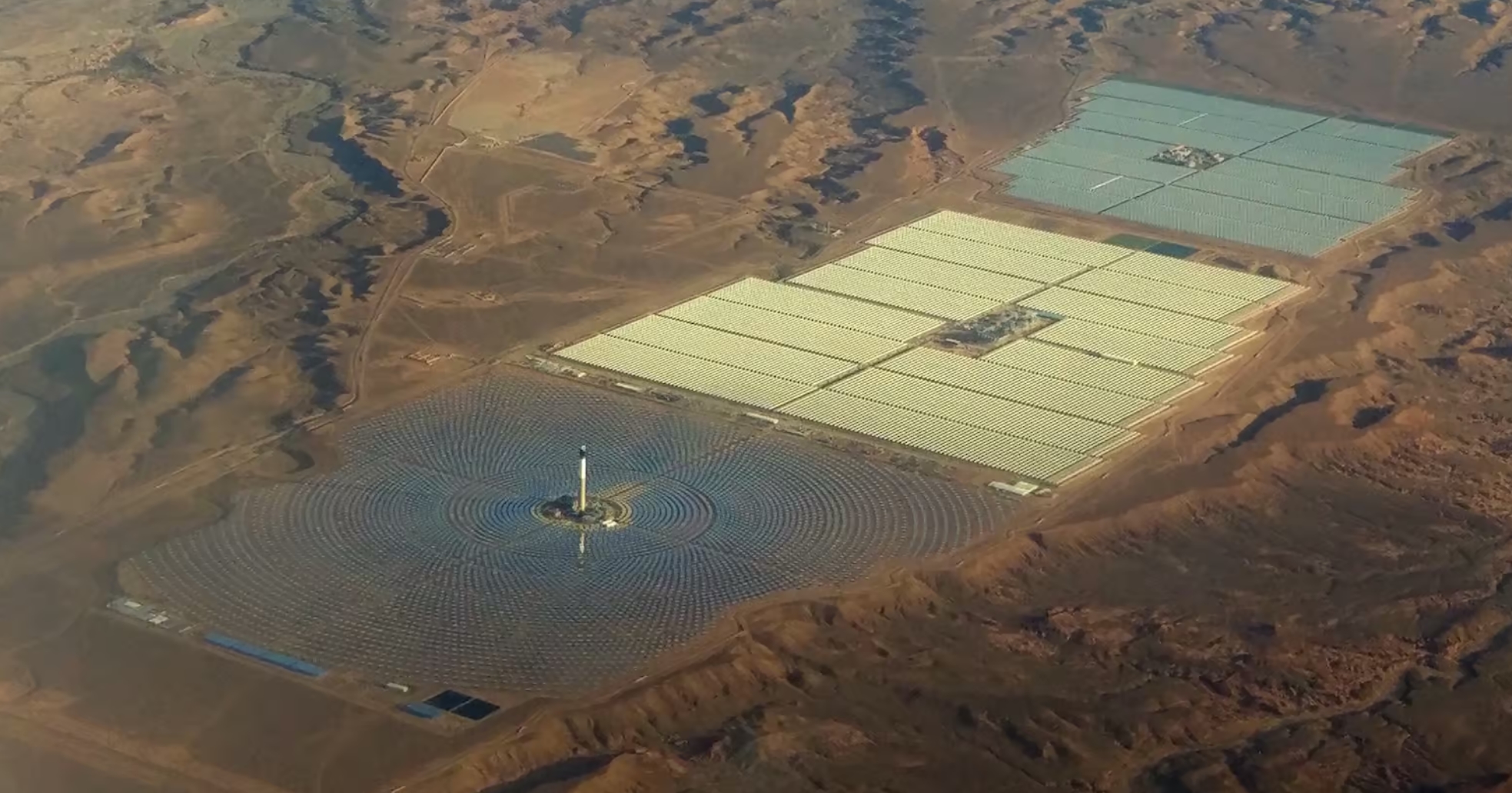
A solar plant is sited by irradiance, and irradiance is the dominant driver of evaporation. The same conditions that make a site profitable (intense sun, dry air, open wind) are the ones that empty an open reservoir fastest. Solar generation needs water for washing, steam and cooling, and it stores that water exactly where it is hardest to keep and hardest to replace.
Nobody builds a solar plant where it is cloudy. Site selection is, at its core, a search for radiation: irradiance maps, clear-sky days, low humidity, cheap flat land. That search lands almost by definition in arid, wind-exposed terrain. And then the plant discovers something the irradiance map never showed: it needs water.
The site is chosen for the sun, and the water is a consequence
Water is not a siting criterion for solar. It becomes an operating problem after the fact. Once the plant is where the sun is, the water has to be brought to it: wells, pipelines, desalination, or trucks. Every cubic meter arrives with a cost that a plant in a temperate region simply never pays, and in many jurisdictions it also arrives with a permitted ceiling on how much can be extracted at all.
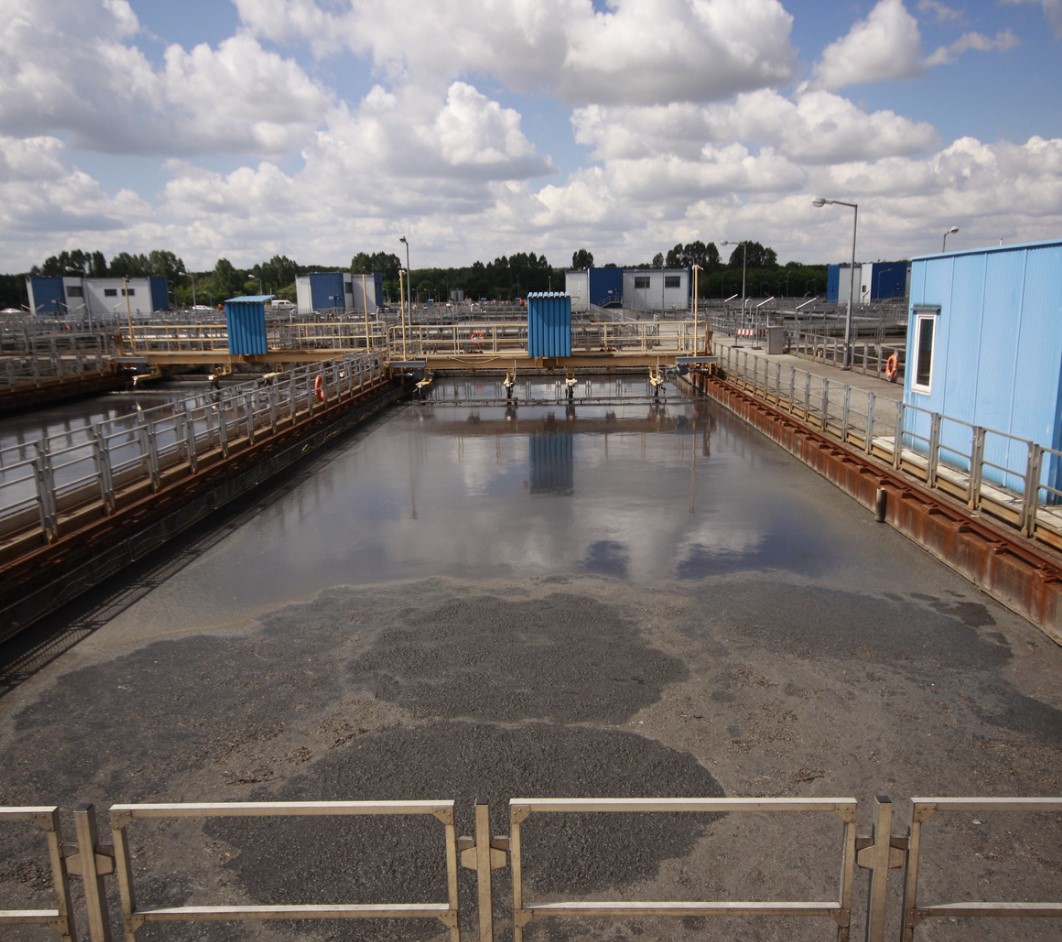
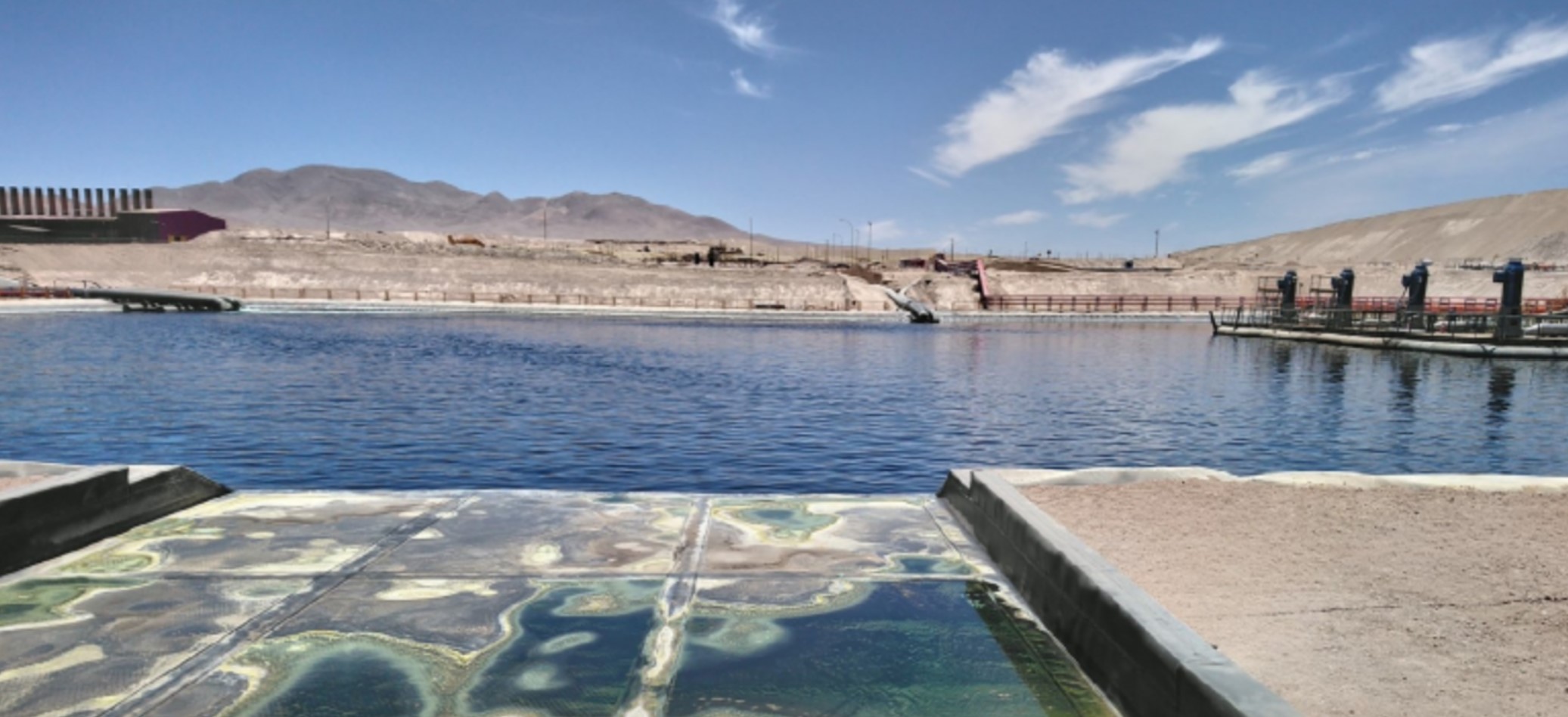
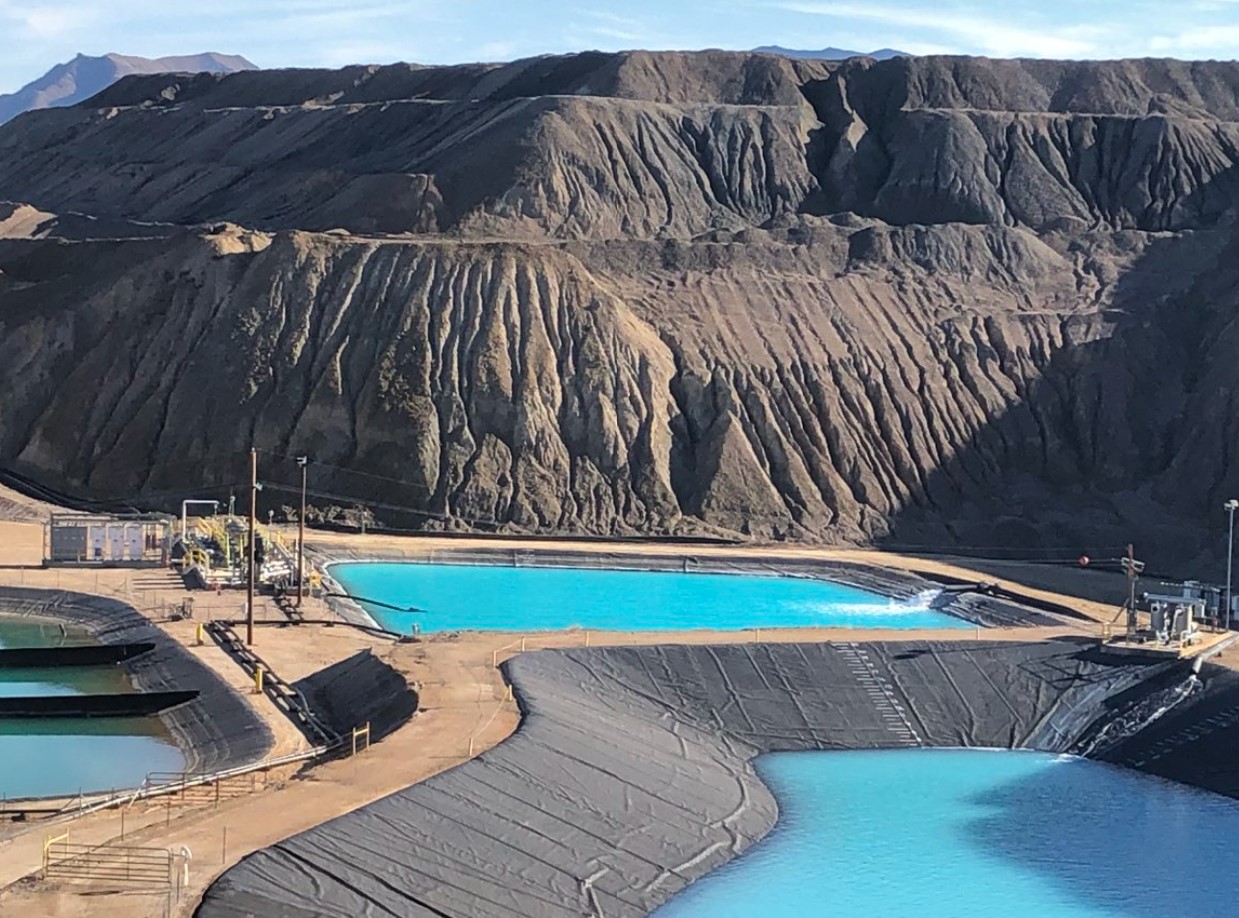
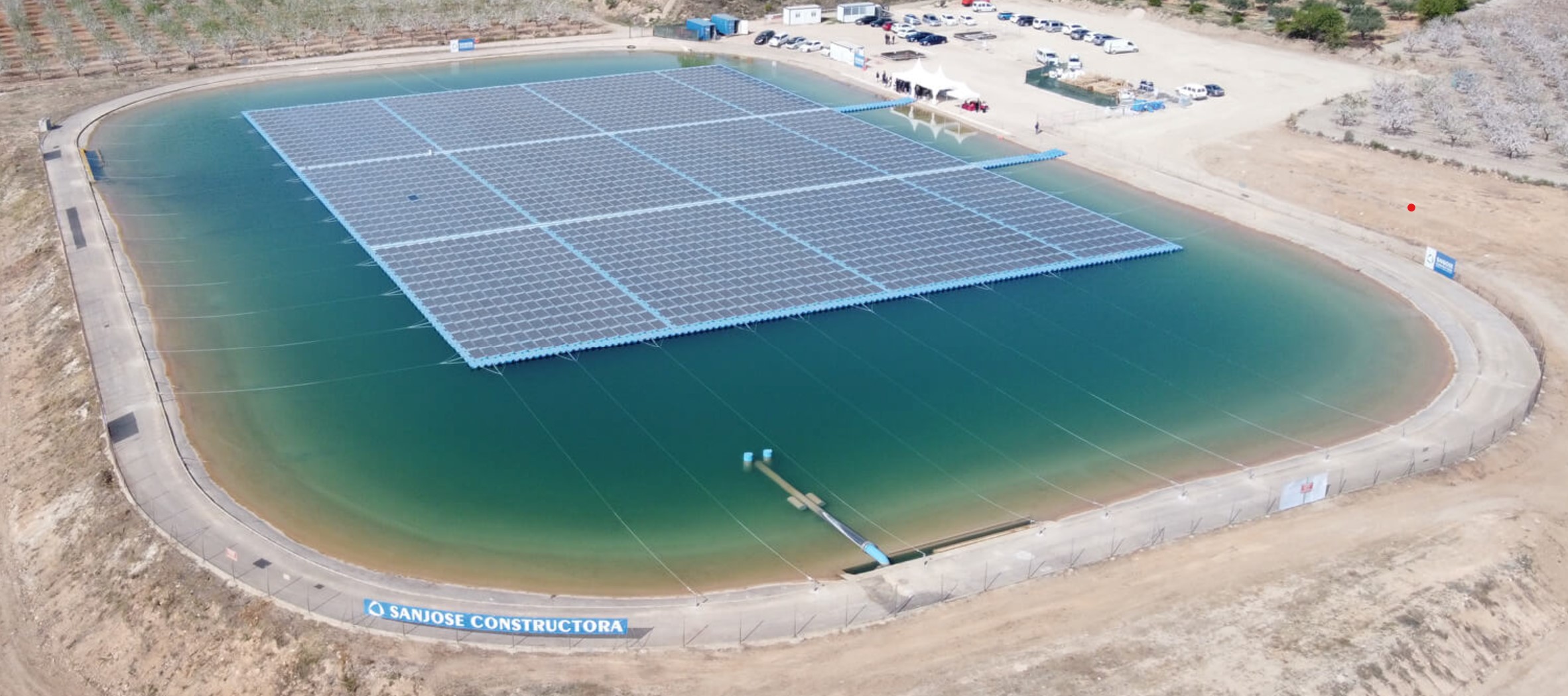
That water then has to be stored on site, in reservoirs, open to the sky. This is where the paradox closes: the water is most expensive to obtain precisely where it is easiest to lose.
A solar plant is a water consumer, and more than most people assume
Photovoltaic parks lose output when panels soil, and soiling is worst exactly where it rains least. Cleaning a module typically takes 3 to 5 liters of water in normal conditions and 7 to 8 liters in dusty arid ones. A 1 MW array of roughly 3,000 panels can consume on the order of 20,000 liters in a single cleaning cycle, and arid sites run more cycles per year, not fewer.
Concentrated solar adds a steam cycle on top of mirror washing. Wet-cooled trough and tower plants consume roughly 2.5 to 3.5 cubic meters of water per MWh generated. Dry cooling cuts that dramatically, by around 90 percent, but it does not reach zero: the mirrors still need washing and the cycle still needs demineralized makeup. Hybrid plants sit somewhere in between, trading water against efficiency on the hottest days, which are also the days the plant most wants to generate.
None of this is a large volume by industrial standards. It is a large volume relative to what the site can supply.
The physics: the radiation that pays for the plant is the radiation that empties the pond
Evaporation from an open surface is not weather luck. It is governed by four terms, and the Penman equation (the open-water form of the same energy balance that underlies Penman-Monteith) makes them explicit: net irradiance as the energy source, the vapor pressure deficit between the water and the air above it, wind speed, and temperature.
Read that list again against a solar site specification. High direct radiation supplies the energy. Low humidity maximizes the vapor pressure deficit, so the air is thirsty. Open, flat terrain gives wind an unobstructed run. High daytime temperature raises the saturation pressure at the surface. A good solar site maximizes all four of them simultaneously.
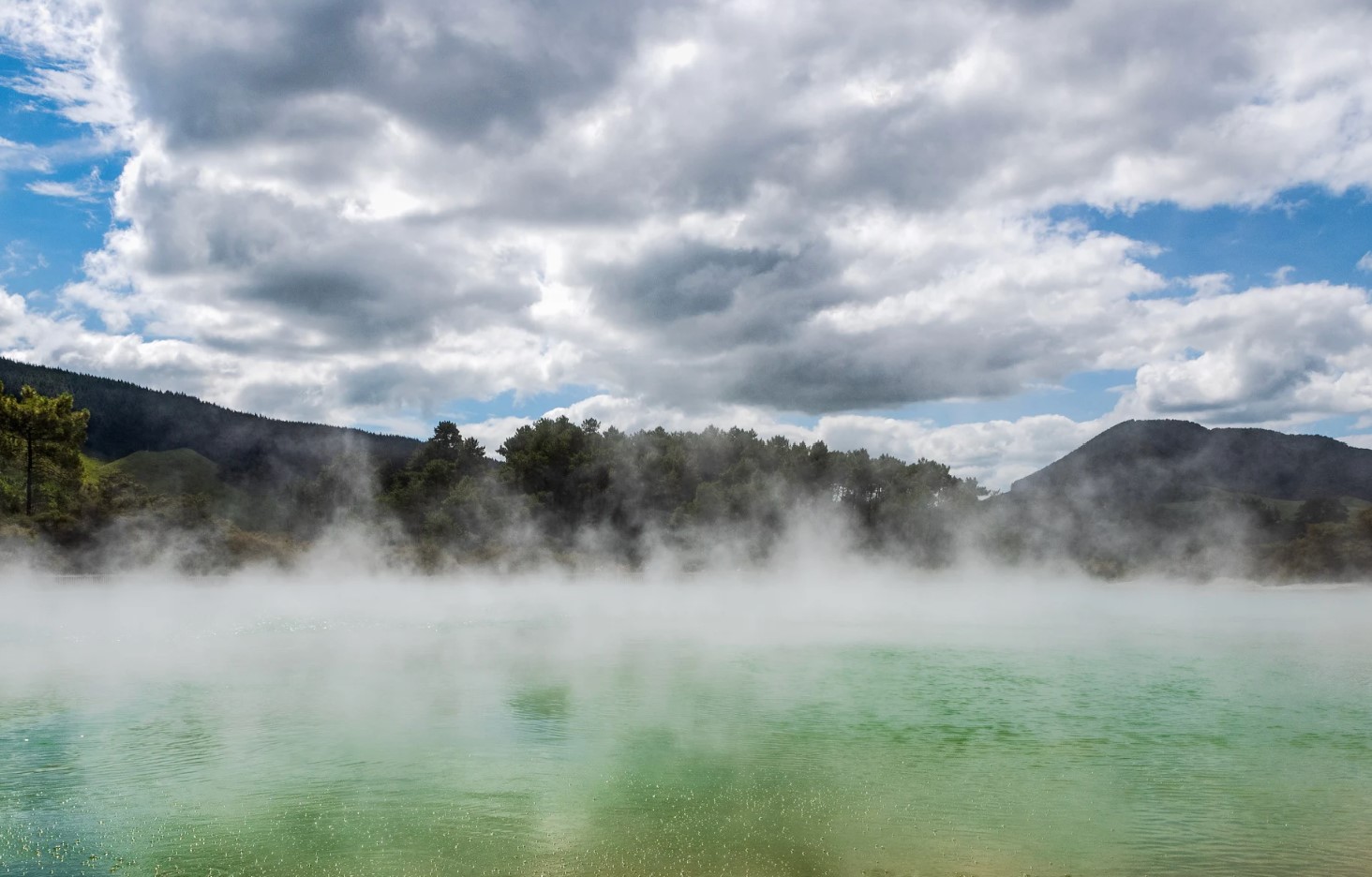
This is not a coincidence, and it is not bad luck. It is the same physical variable, solar radiation, appearing in two different equations: the one that produces the plant's revenue and the one that drains its reservoir. In arid regions an uncovered reservoir can lose several meters of water column per year through nothing but that mechanism.
Wind is the co-driver that gets underestimated
Radiation supplies the energy to change liquid water into vapor, but wind is what carries that vapor away and keeps the process going. Without wind, a saturated boundary layer forms over the surface and evaporation slows itself down. With wind, that layer is stripped away continuously and the surface never gets the chance.
Light does a second job: it grows algae
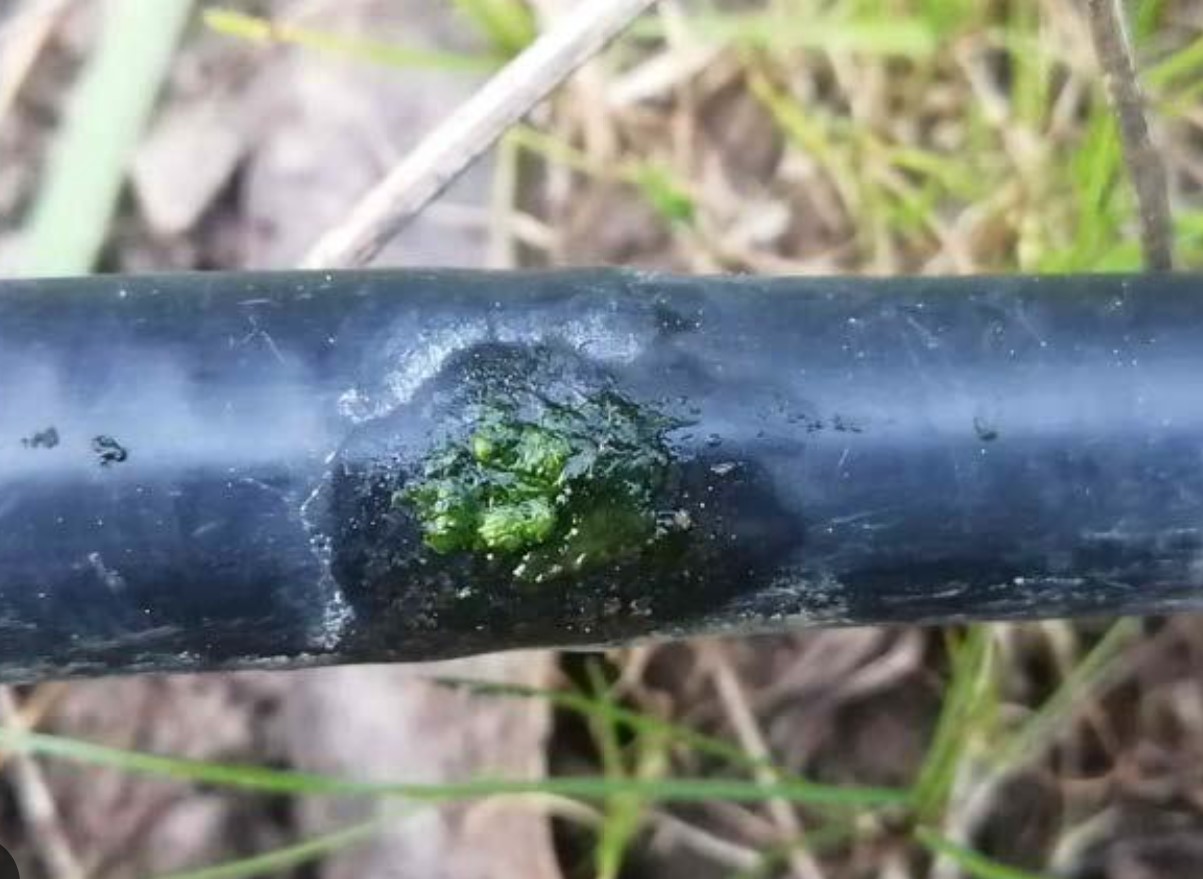
Wherever there is water, nutrients and light, algae grow. In raw water and wash water storage, that means clogged filters, fouled nozzles, more dosing and more labor hours. The consequence is quietly circular: fouled nozzles degrade the quality of the panel wash that the plant is storing the water for in the first place.
The trigger variable is light. Algae do not thrive on a surface that receives none.
The only open water for kilometers
An open reservoir in an arid landscape is a mirror visible from a long way off, and to a bird it reads as an oasis, because in that landscape it effectively is one. That draws wildlife onto an industrial surface, which becomes an inspection finding and, increasingly, a permit condition.
Environmental permits for large plants increasingly require covering or otherwise managing open water surfaces to protect birds and local fauna. What used to be good practice is becoming an obligation, and regulators audit it on site.
What can actually be managed
Here is the useful part. You cannot change the radiation, because the radiation is the reason the plant exists. You cannot move the site toward humidity without moving it away from the sun. You cannot negotiate with the vapor pressure deficit. Climate, siting and irradiance are not variables an operator controls.
What is controllable is how much liquid surface is exposed to the atmosphere.
Evaporation, algae growth and wildlife attraction look like three unrelated problems handled by three different departments. They are the same problem observed three times, because they all happen in one place: the interface between the liquid and the air. Reduce that exposed area and all three respond at once, because all three depend on it.
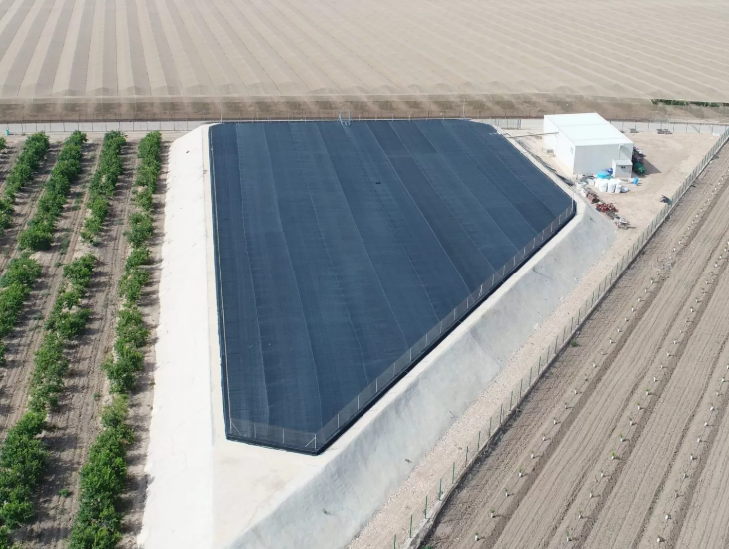
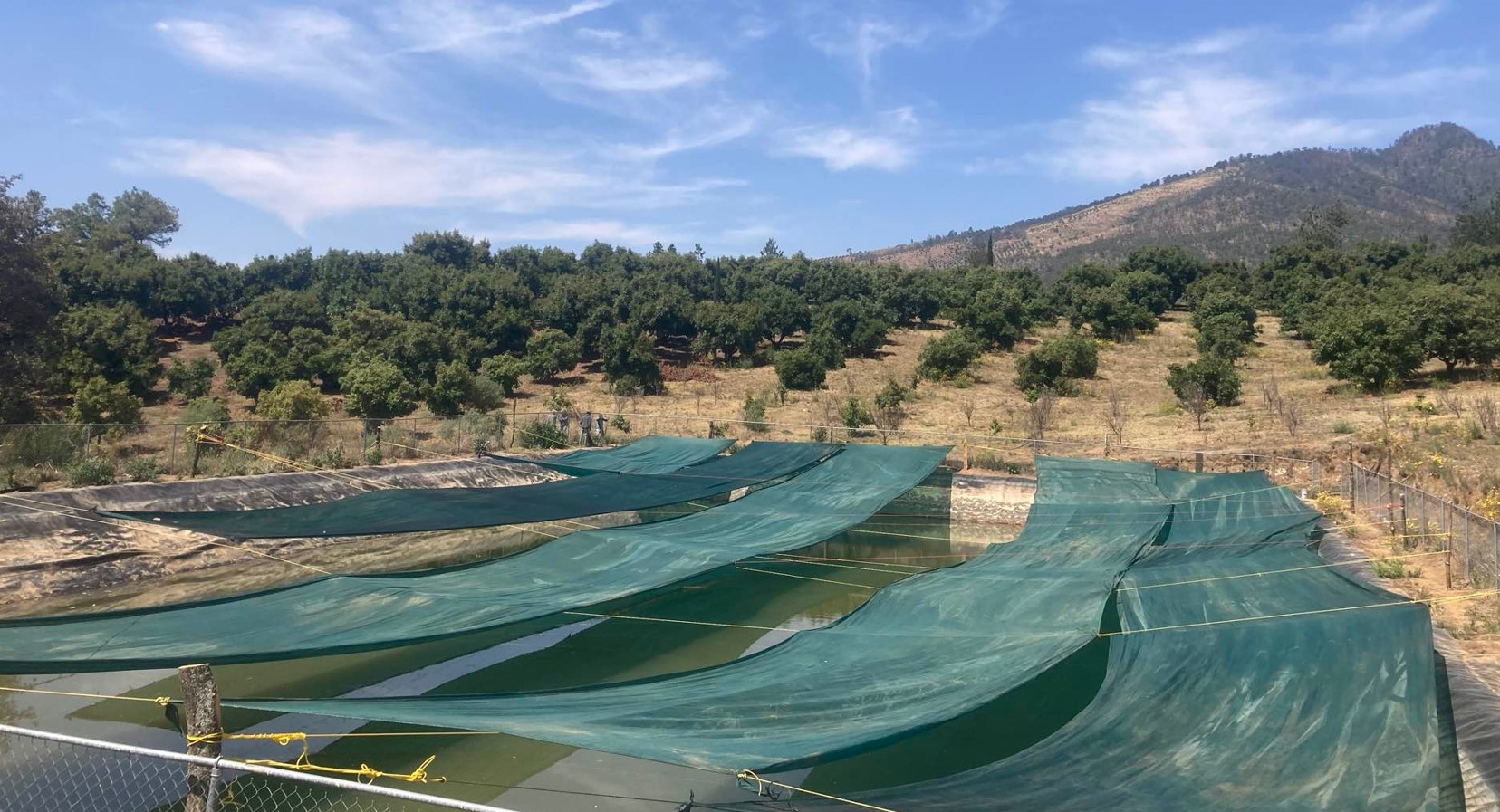
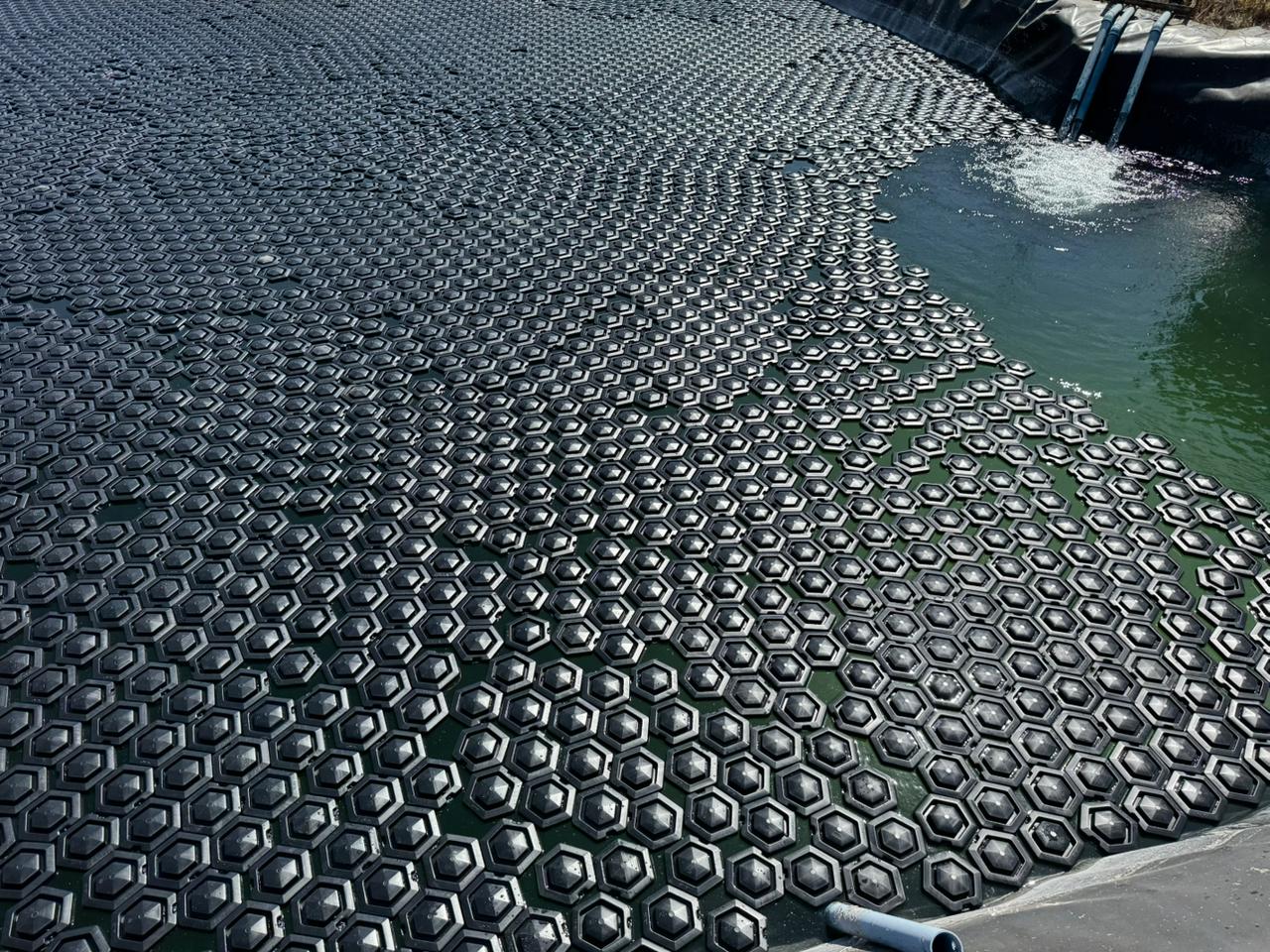
This is what floating covers have been doing for decades in mining, agriculture and process industry, and the mechanism transfers to solar without modification, because the physics does not care what the plant produces. Modular covers float on the surface, adjust themselves as the level changes, install without draining the reservoir or stopping the operation, and work without maintenance for decades. The barrier cuts the mass transfer of vapor, blocks the light that feeds algae, and removes the visible water mirror.
The argument is not that a cover is a clever piece of equipment. It is narrower and more useful than that: in the evaporation equation of a solar plant, the exposed surface is the only term the operator actually owns.
Take the next step
If you operate wash water, raw water or cooling reservoirs at a solar plant and want to understand how much water your specific site is losing and what covering the surface would recover, learn more about how modular floating covers are applied in solar generation.
→ Learn more about floating covers for solar plants: /solar