The Cyanide Code and Floating Covers: How to Meet Standard of Practice 4.4
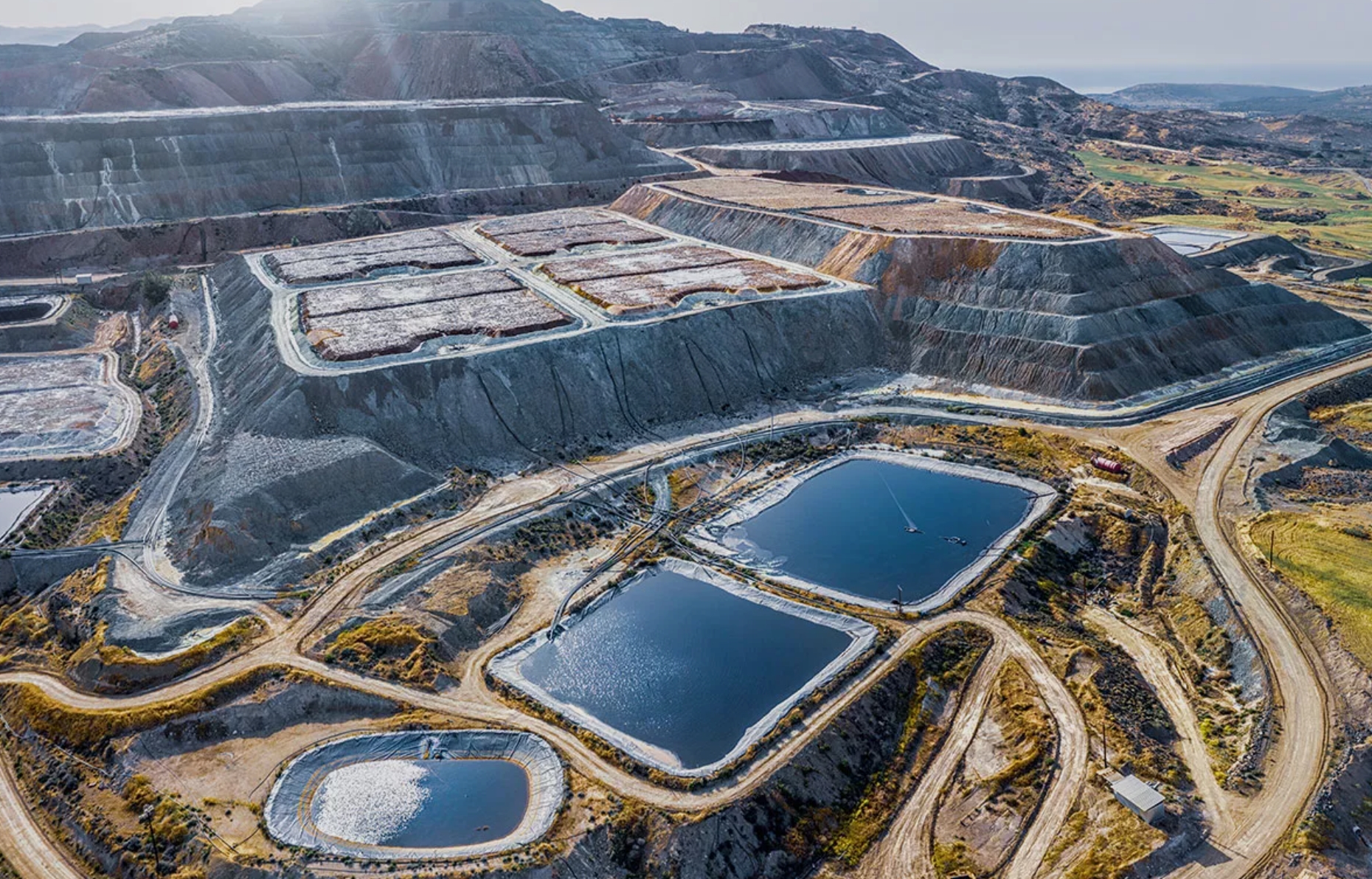
Every three years, a gold or silver operation certified under the Cyanide Code goes through a recertification audit by an independent auditor. Among the dozens of questions in the Verification Protocol, one is answered by looking at a pond: what keeps a bird, a fox or livestock from drinking that solution?
This article explains what the Code requires for process solution ponds, which options exist to keep wildlife out, and where a modular floating cover such as Covex® fits into a verifiable compliance strategy.
What the Cyanide Code is
The International Cyanide Management Code is a voluntary, performance-based certification program for gold and silver mining and for cyanide producers and transporters. It is administered by the International Cyanide Management Institute (ICMI) in Washington, DC.
It was born out of an accident. In January 2000, at Baia Mare, Romania, about 100,000 m³ of cyanide-bearing tailings spilled into a tributary of the Danube and caused a massive fish kill. UNEP convened an international workshop in Paris, and in March 2002 the Code was formally announced at the World Mines Ministries Forum in Toronto.
Its structure is simple:
- Principles: broad commitments (production, transportation, handling and storage, operations, decommissioning, worker safety, emergency response, training and dialogue with communities).
- Standards of Practice: performance objectives under each principle.
- Guidance and Verification Protocols: the specific questions the auditor reviews.
The auditor issues a finding for each Standard of Practice: full compliance, substantial compliance (which requires a Corrective Action Plan that can be completed within one year) or non-compliance. The lowest finding sets the status of the whole operation. The Code complements local regulation; it does not replace it.
Where ponds come in: Principle 4, Standard of Practice 4.4
Principle 4 (Operations) requires managing cyanide process solutions and waste streams to protect human health and the environment. Within it, Standard of Practice 4.4 requires implementing measures to protect birds, other wildlife and livestock from the adverse effects of cyanide process solutions.
Three definitions organize everything else:
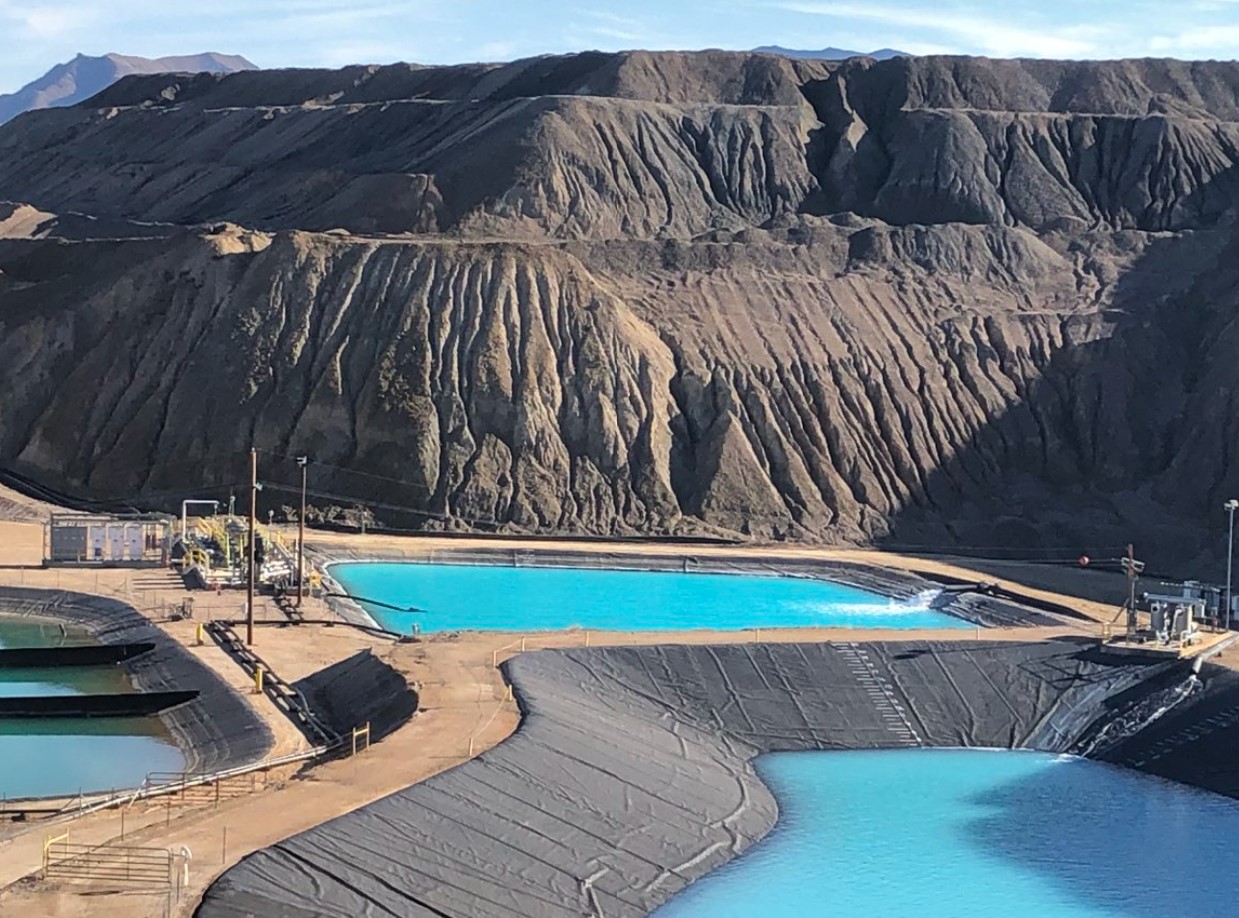
- Process solution is any solution containing 0.5 mg/L WAD cyanide or more. That covers pregnant and barren solution ponds, intermediate, emergency and storm-event ponds, channels, and open water on heap leach pads.
- The 50 mg/L WAD cyanide threshold is the Code’s reference for open water. If the operation is designed to stay below it, physical exclusion measures may not be required, but the design concentration must be documented in the operating procedures.
- If the concentration exceeds, or can exceed, that value, the operation must restrict wildlife access. ICMI’s own Mining Guidance lists fencing, netting and floating bird balls as typical measures.
One detail that often surprises operations at audit time is management of change. The Guidance uses a concrete example: a mine operating below 50 mg/L that starts processing ore with higher copper content will need more cyanide to leach it, and its solution can become toxic to birds. The management-of-change procedure must anticipate that scenario. An operation whose protection relies only on keeping concentration low is exposed every time the ore, the recirculation or the efficiency of the destruction plant changes.
Why birds end up in ponds
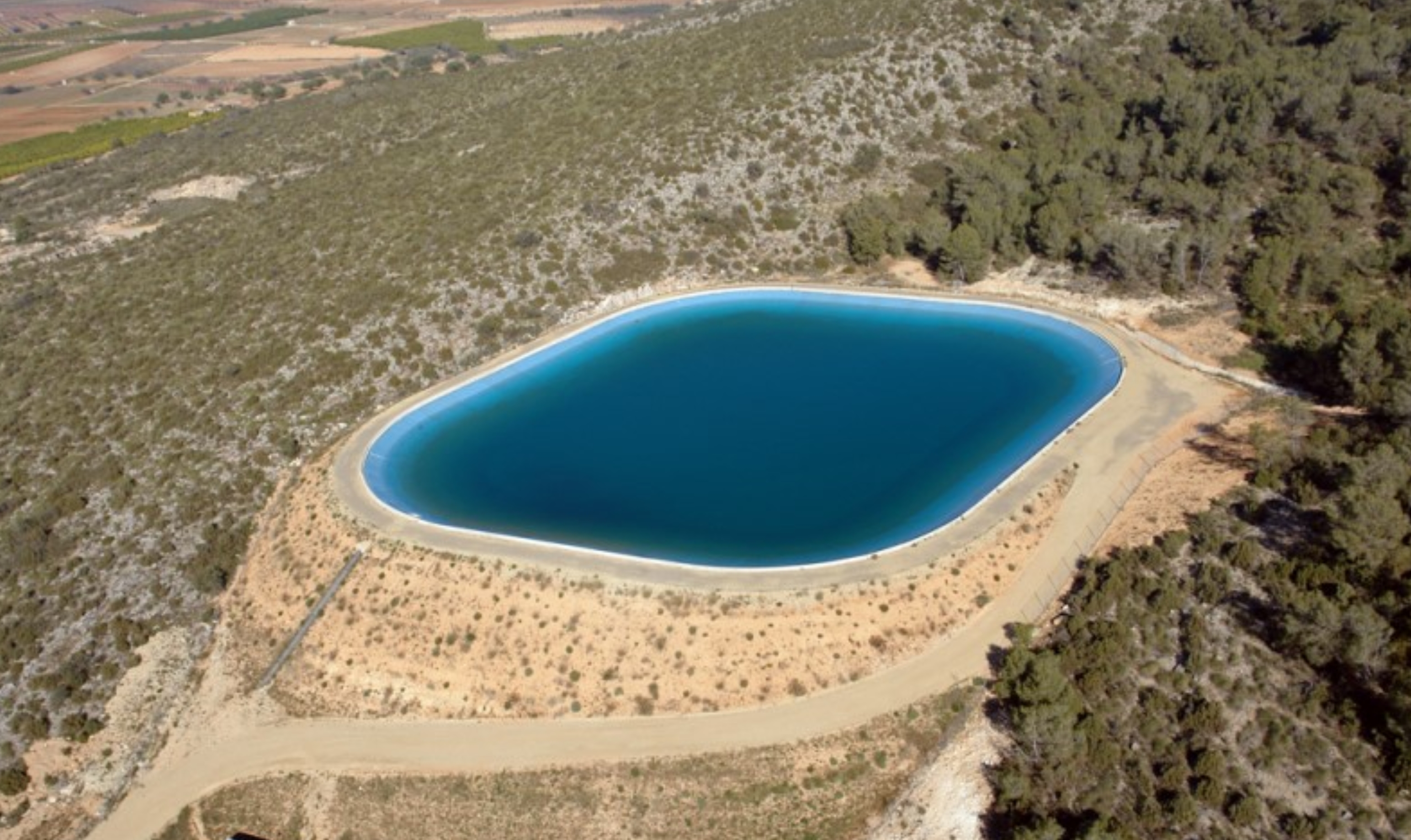
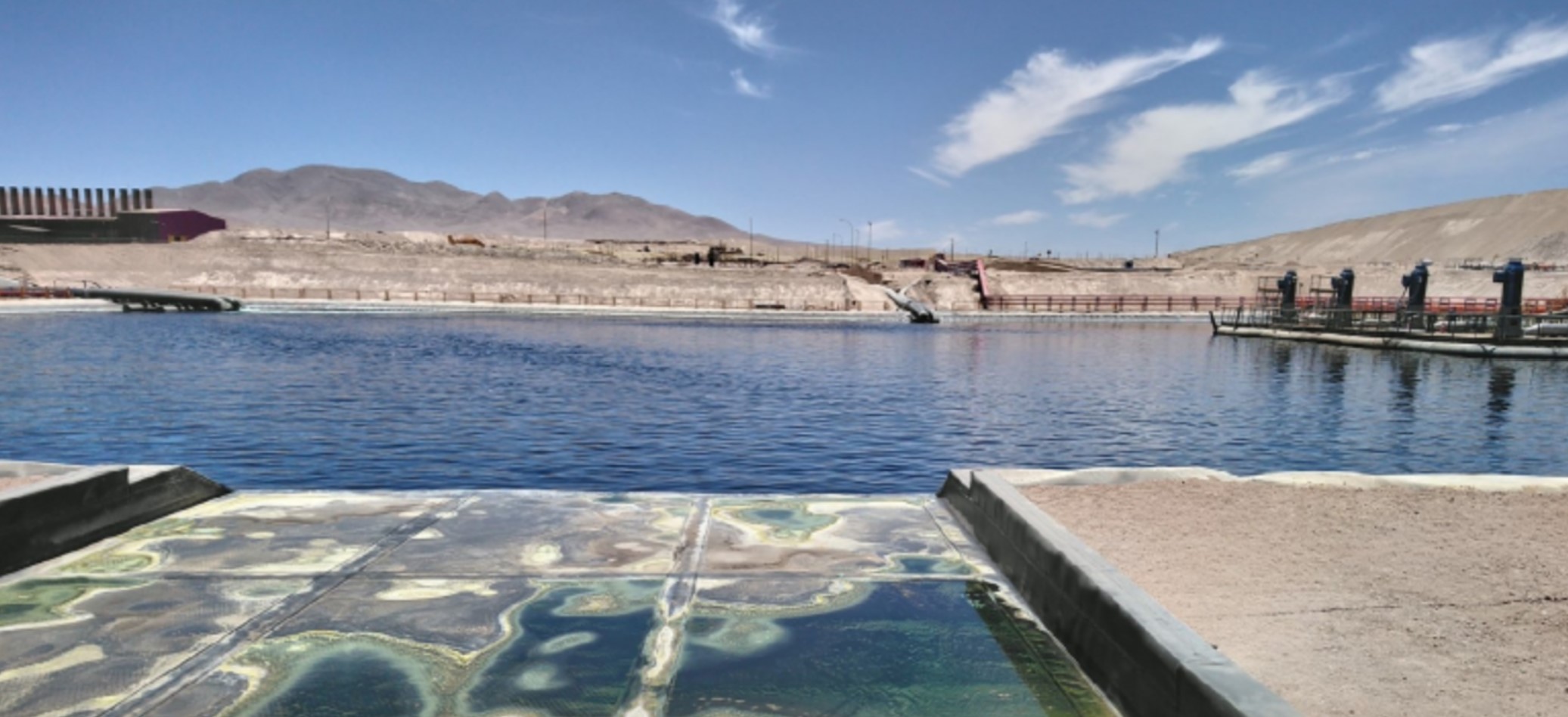
In the Atacama Desert, in Nevada, on the Peruvian altiplano or in outback Australia, a leach pond may be the only visible water for tens of kilometers. From the air, an open water surface is an unmistakable signal. Migratory routes and occasional waterfowl do not tell a lagoon from a barren solution pond.
Toxicity is high and fast. Reported oral LD50 values for birds range from 0.8 mg/kg of body weight (American racing pigeon) to 11.1 mg/kg (domestic chicken), with symptoms appearing between half a minute and ten minutes after ingestion, and ingestion of WAD cyanide solutions may cause delayed mortality. That delayed mortality is the silent problem: the bird drinks, flies away and dies far from the fence line.
This is why the technical literature warns that avian deaths usually go undetected and are significantly underestimated, creating the perception that no risk exists and placing the burden on the operation to document that wildlife is not at risk. Studies using ducks as a model migratory bird also observed sublethal effects at concentrations well below 50 ppm WAD. Many operations therefore choose to restrict access regardless of concentration.
Options for restricting access, and their limits
Perimeter fencing. Works for livestock and mammals. It does not stop birds.
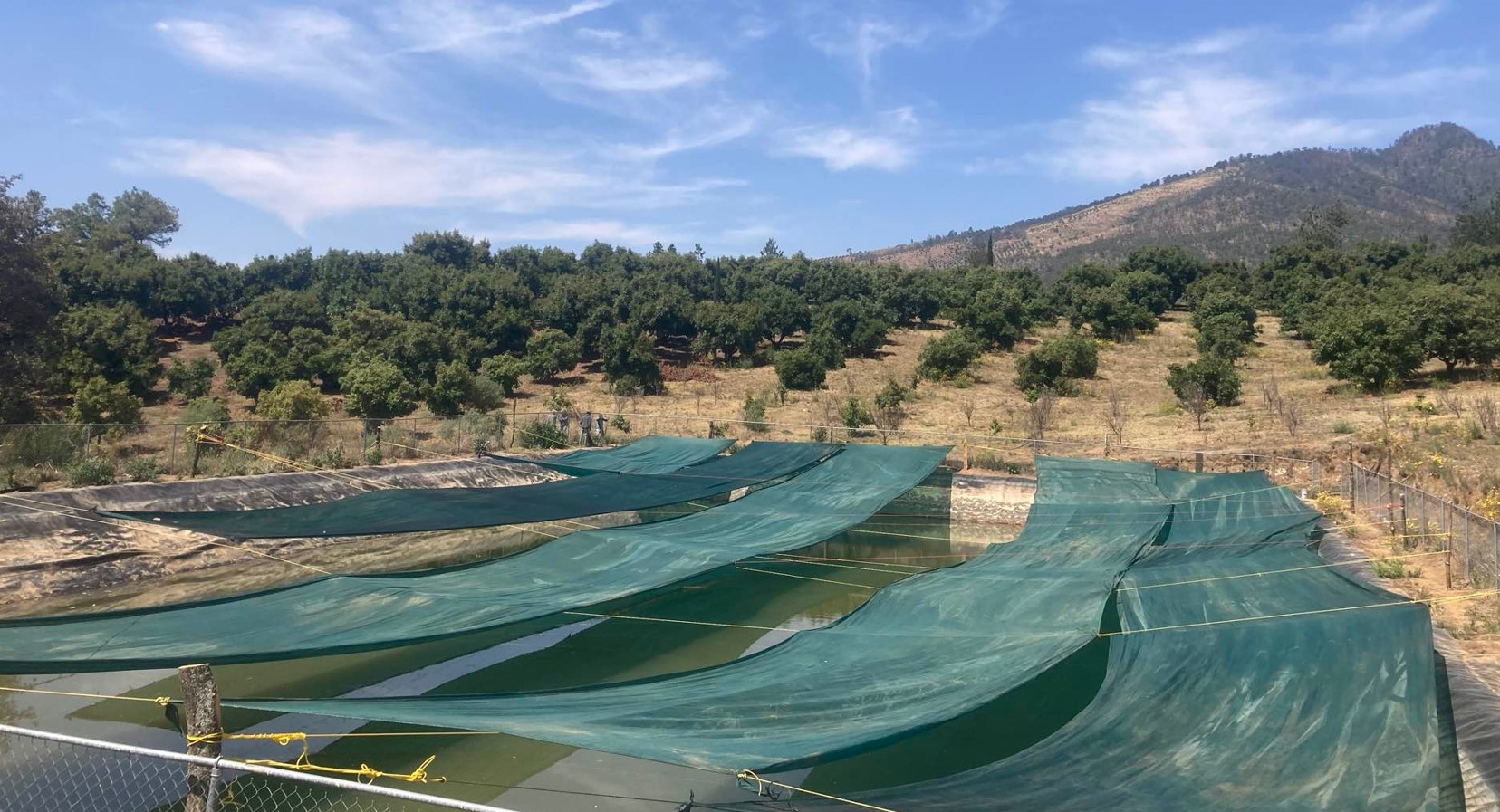
Netting. Effective when well designed, but cost scales with surface area; it needs supporting structure, must carry wind, snow and ice loads, gets in the way of pumps, floats and access, and any tear opens a door. On large ponds, maintenance becomes a permanent budget line.
Hazing (cannons, lasers, sound, effigies). Hazing techniques have proven ineffective: birds habituate.
Cyanide destruction. Lowers WAD and is a core tool of the Code, but reaching levels below 50 mg/L through oxidation with SO₂/air, H₂SO₅ or H₂O₂ involves reagent consumption and costs that can be substantial.
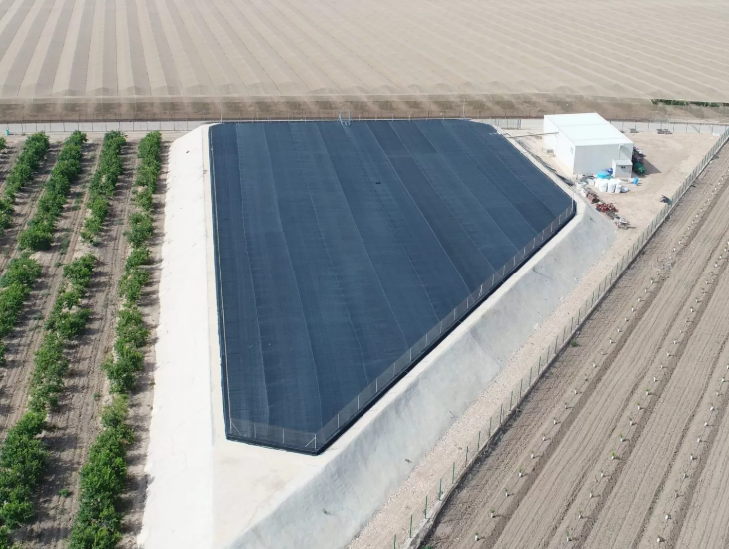
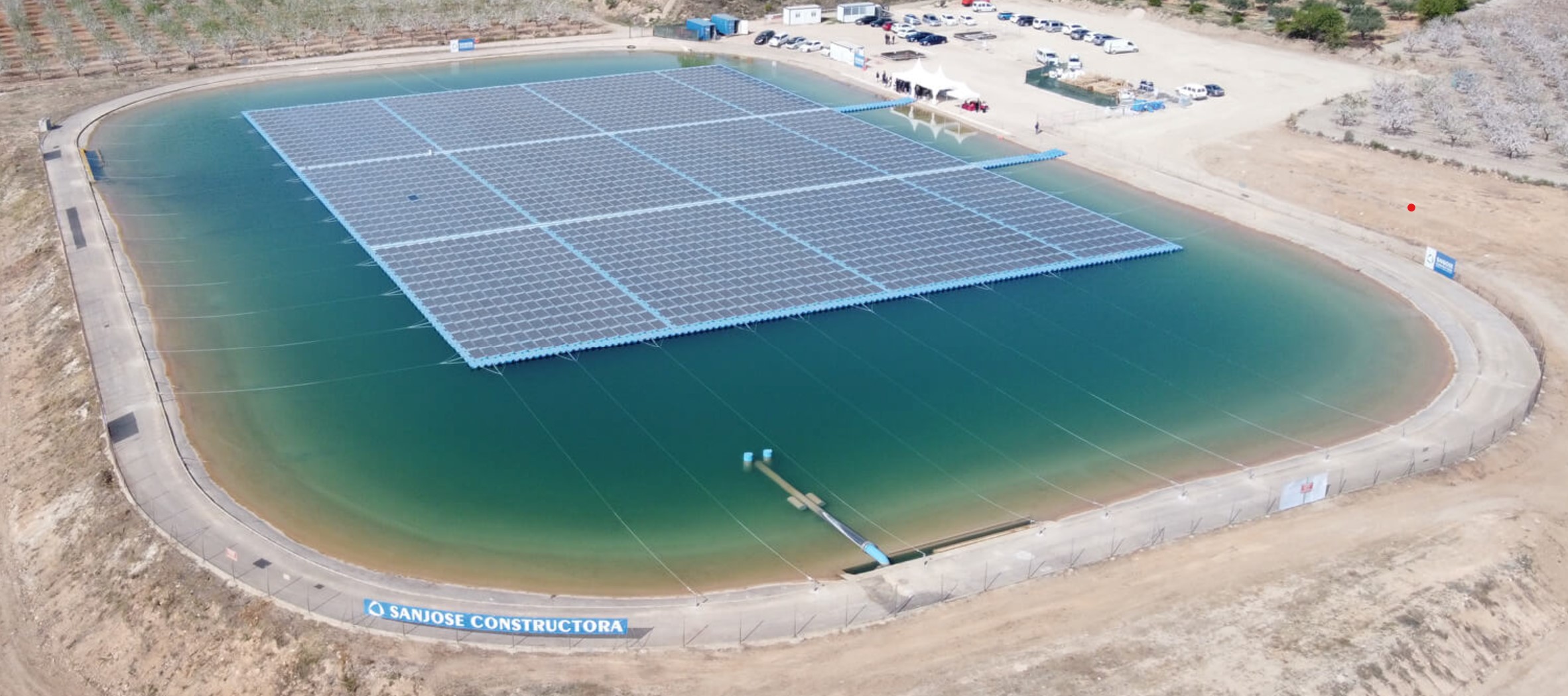
Floating covers. They remove the open water surface, which is what attracts the bird. They need no structure and no operation: they follow the pond level, let rain through and are installed without emptying the pond. They are a passive, permanent measure, which in audit language means evidence that is easy to show.
How Covex® works
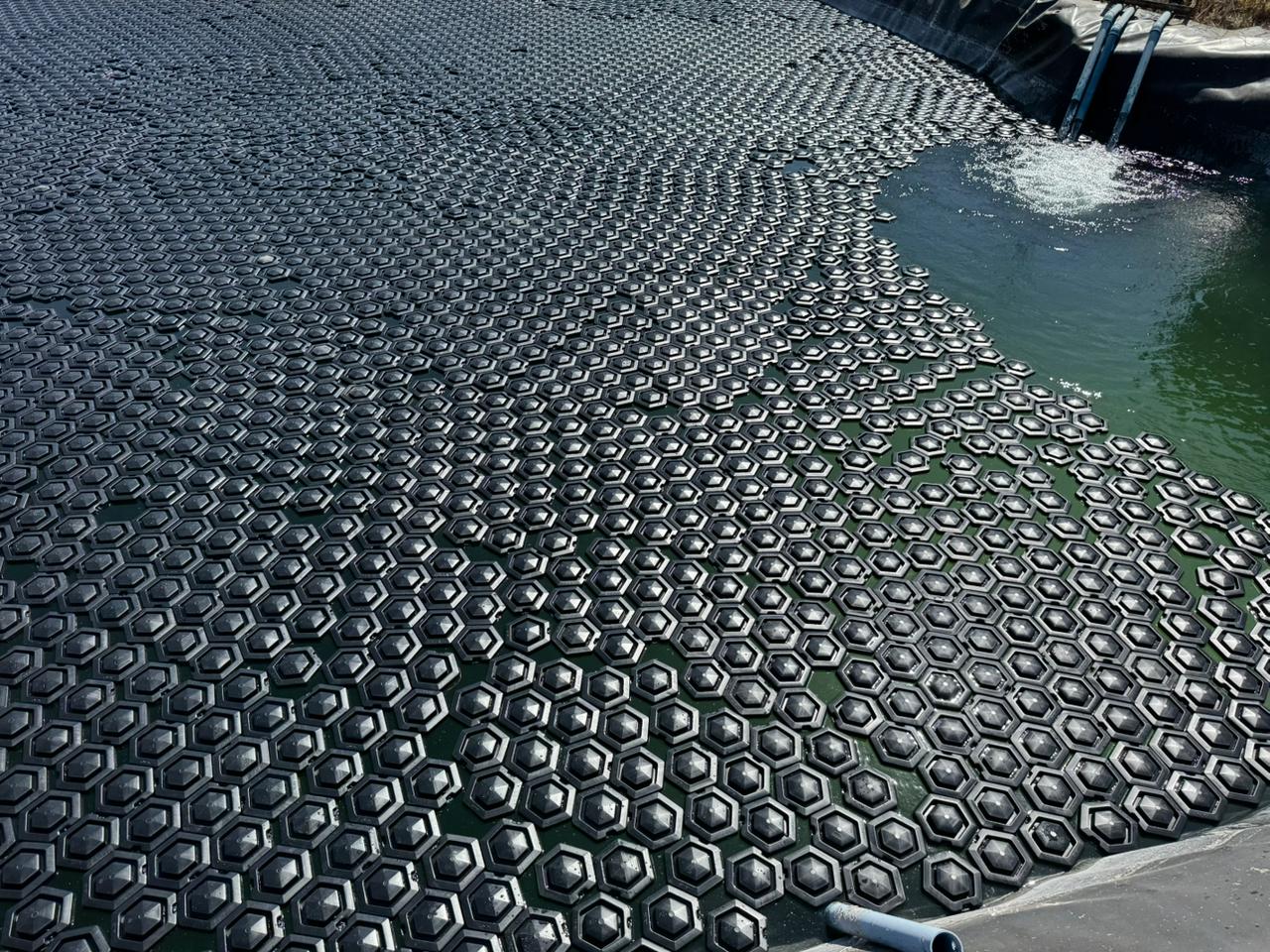
Covex® is a modular floating cover made of HDPE hexagons with factory-sealed water ballast. Each unit measures 152 mm (6 in) across the flats and weighs 270 g (0.6 lb); 50 units cover one square meter.
What matters for Standard of Practice 4.4:
- 98% surface coverage. The open water surface disappears. From the air, the pond no longer looks like water.
- Wind stability. The aerodynamic profile and an exposed height above the waterline of only 27 mm give a contractual wind resistance of 100 km/h (62 mph). The cover does not stack up or leave bare patches after a gust, and that is exactly what the auditor checks in the field.
- No maintenance, no energy. Units adjust automatically to level changes. There are no nets to repair and no equipment to run.
- Durability. HDPE with UV and antioxidant additives, operating range from -40 °C to 85 °C (-40 °F to 185 °F), 10-year warranty and 25-year expected service life. Fully recyclable at end of life.
- Installation on live ponds. No need to stop the circuit or drain the pond.
Covex® is the evolution of Barrier Ball®, the first floating cover in the Americas, in service since 1997. The concept is the same: eliminate the water-air interface. The hexagonal geometry raises coverage from 91% with spheres to 98% and cuts logistics cost per square meter. In Chile, environmental permits (RCA) for mining projects have already included floating-ball covers as a committed measure to keep wildlife out of process ponds, and regulators have checked for them on site inspections. In other words, a floating cover is not a new idea to the regulator: it is a measure they already know how to read.
Additional benefits at a cyanidation plant
The same barrier that keeps birds out produces other effects worth bringing into the analysis:
- Evaporation. Covex® reduces evaporation by around 97% on full-scale reservoirs. At an operation in an arid region that means less make-up water and a more stable reagent concentration in the circuit.
- Heat and freezing. At high-altitude mines or sites with hard winters, the cover reduces heat loss from the solution and delays pond freezing.
- Algae. With no sunlight on the surface, algae growth in barren solution and process water ponds drops by around 95%, with less fouling of filters and pumps.
- Gas exchange. Reducing the water-air interface lowers HCN volatilization from the surface, meaning less reagent loss and less gas in the immediate surroundings of the pond. At the same time, it can slow natural degradation in that pond. This effect is assessed within each operation’s cyanide balance.
What a floating cover does not do
We would rather say it before the auditor asks:
- It does not lower WAD cyanide concentration. It restricts access; it does not replace cyanide destruction, monitoring or wildlife observation records.
- It does not certify anything on its own. Compliance with each Standard of Practice is determined by the auditor based on evidence: the cover must be described in the operating procedures, with inspection records for coverage and integrity.
- It is not applied on tailings storage facilities. Covex® is designed for solution ponds, not for TSFs, which have their own inspection and safety requirements.
- It requires a chemical compatibility check. HDPE is highly resistant to alkaline solutions, but before any warranty commitment we run an immersion test with the actual process solution.
- It slightly changes the water balance. The cover displaces its own weight in solution, about 13 mm (0.5 in) of level over the covered area. Rain still gets in and storm capacity is unchanged, but the figure goes into the freeboard documentation required under Standard of Practice 4.1.
Checklist to arrive prepared for the audit
- Inventory all open water at 0.5 mg/L WAD or above: ponds, channels, pads.
- Document design WAD concentration and actual measured values, pond by pond.
- Define the protection measure for each one: controlled concentration, access restriction, or both.
- Build that measure into the operating procedures and the management-of-change process.
- Keep inspection records (coverage, integrity, wildlife observations) across the full three-year cycle, not just before the audit.
- Tie the measure to the water balance and freeboard.
- Include wildlife protection in community communication (Principle 9).
Frequently asked questions
Does a floating cover replace the cyanide destruction plant?
No. They are complementary measures: destruction lowers WAD; the cover removes wildlife exposure even if WAD fluctuates.
What about rain and freeboard?
Rain passes between the units and enters the pond. The cover adds about 13 mm of displacement, which is accounted for in the design.
Can it be installed on a pond in operation?
Yes. Units are launched from the edge and spread out on their own by flotation.
Does it work on tailings storage facilities?
No. Covex® is applied on solution ponds and process water reservoirs.
How long does it last?
10-year warranty and 25-year expected service life outdoors, with no maintenance.
Next step
If your operation is preparing for an initial certification, a recertification or a Corrective Action Plan under Standard of Practice 4.4, we can go through your pond inventory together, estimate the area to cover and propose an immersion test with your process solution. Get in touch and we will share mining case studies.
→ Learn more about floating covers for mining: /mining