How to Choose a Floating Cover for an Irrigation Pond: A Buyer's Guide
An uncovered irrigation pond loses water every day, and the loss peaks exactly when the crop needs it most. A floating cover can recover most of that water, but only if it is the right cover for the pond. The wrong choice drifts in the wind, piles up against one bank, collects rainwater or degrades in the sun within a few seasons.
This guide walks through the decision in five steps, from defining what you need the cover to do to calculating the water it will recover.
Step 1: Define what the cover has to solve
Most irrigation ponds have more than one problem. Rank them, because the ranking decides the type of cover.
- Evaporation: water lost to the air, typically 1,000 to 2,000 mm per year in Mediterranean and semi-arid climates and more in deserts.
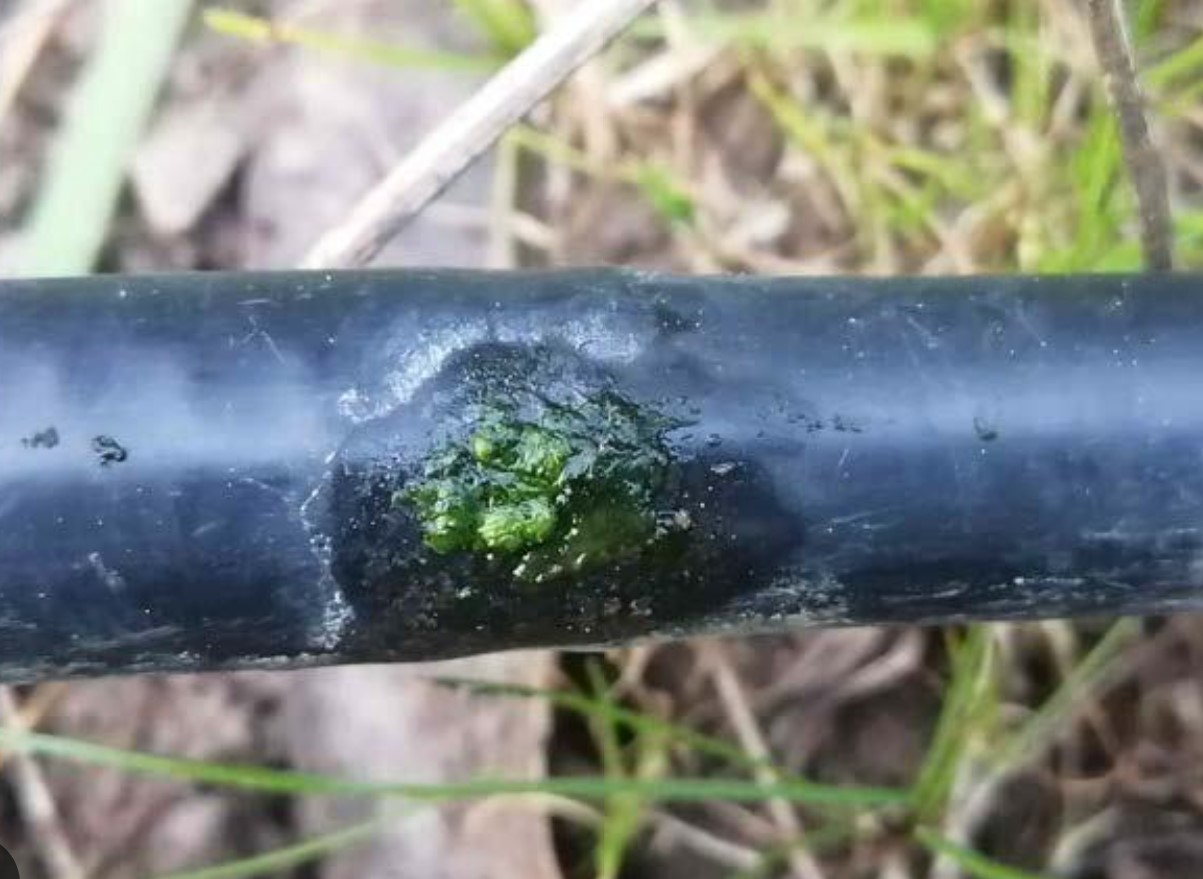
- Algae and clogged drippers: sunlight on open water drives algae that clog emitters and filters and force chemical treatment.
- Birds and food safety: open water attracts birds whose droppings carry pathogens into irrigation water, a recurring finding in food safety audits.
- Frost: for ponds that feed frost-protection sprinklers, the water must still be liquid and pumpable at dawn.
If evaporation and algae lead the list, you need high, stable coverage. If birds are the only issue, a lighter solution may be enough.
Step 2: Collect the pond data
A supplier needs these facts to size and quote a cover correctly:
- Location (for climate data) and water surface area in m².
- Depth and how much the level drops through the season.
- Liner type and slope of the banks.
- Typical and maximum wind at the site.
- Inlets, outlets, pumps, floats or aerators on the surface.
- Whether the water is used for drip irrigation, fertigation or frost protection.
Step 3: Compare the types of cover
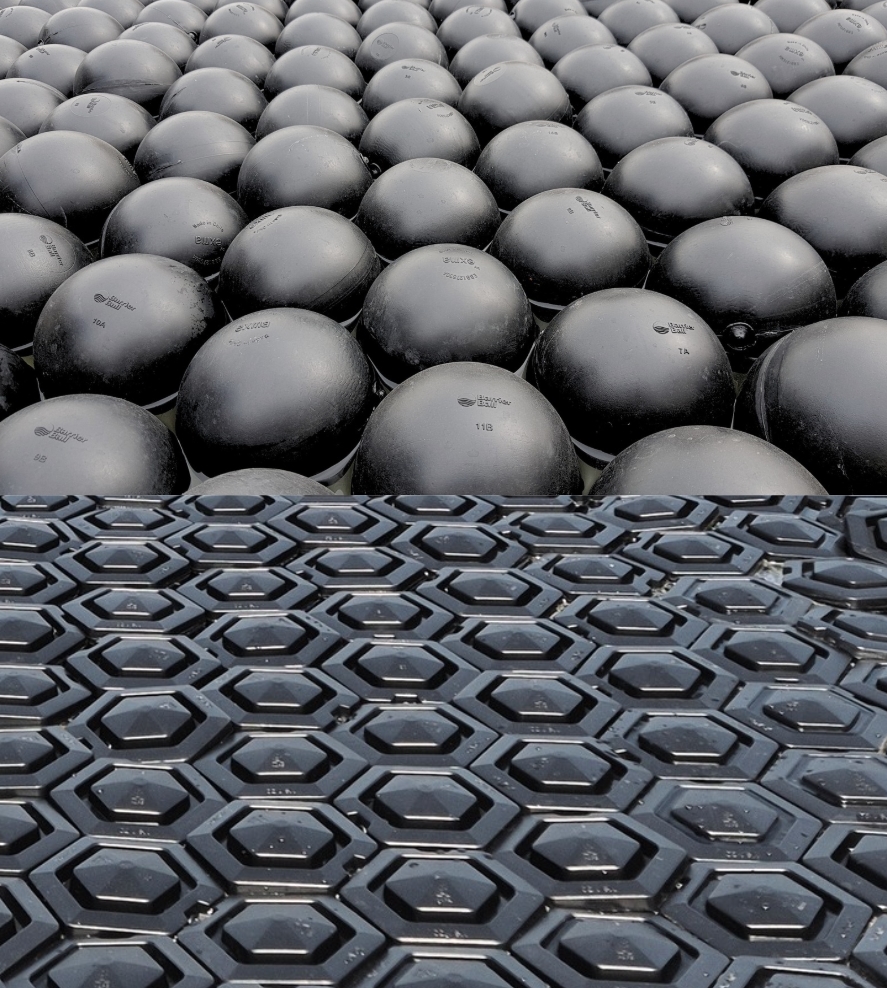
- Floating balls: about 91% coverage. They follow the water level, rain passes through, and they install with no works and no draining.
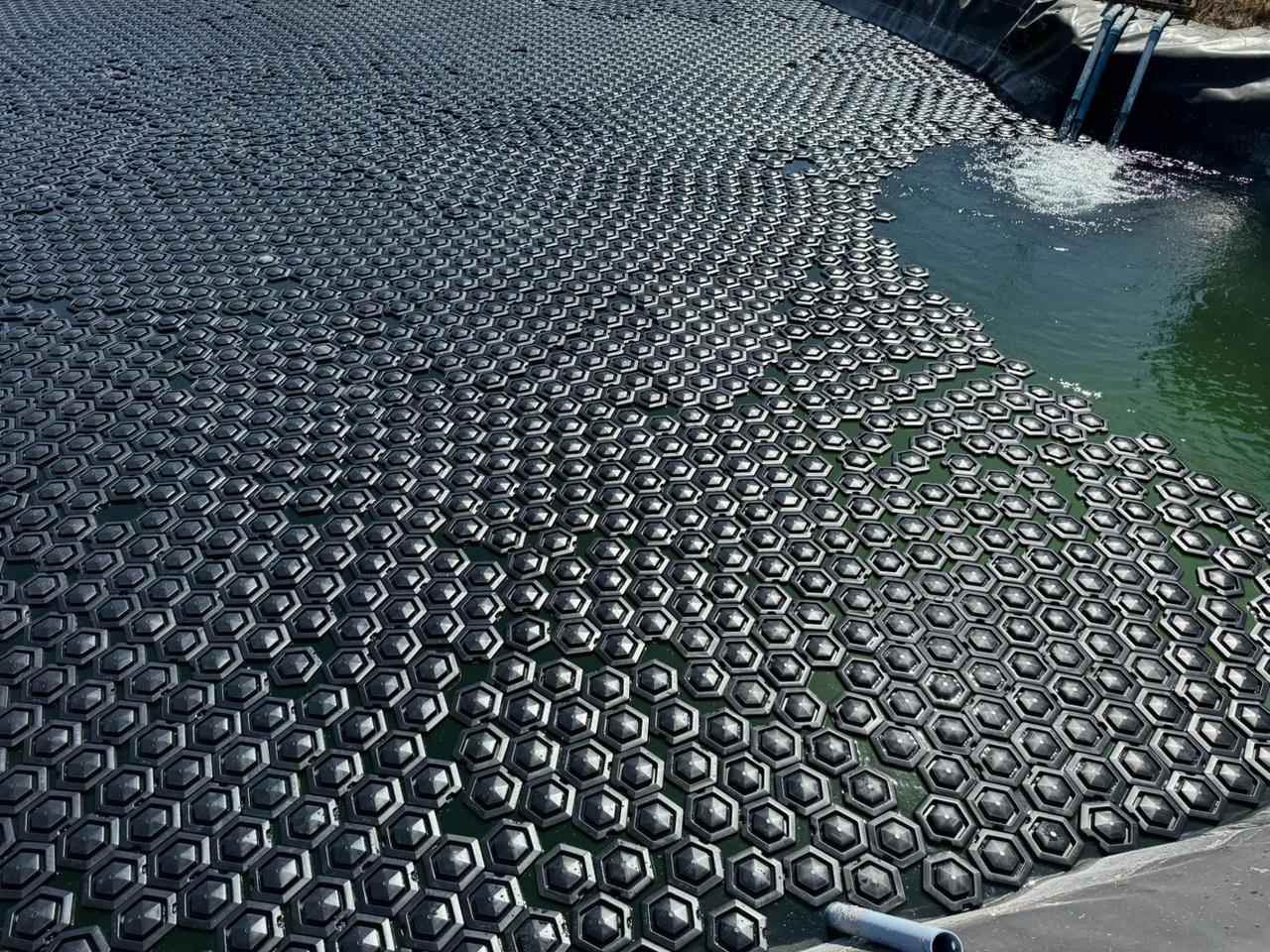
- Modular hexagonal cover: up to 98% coverage. It follows the water level, rain passes through, and it installs with no works and no draining.
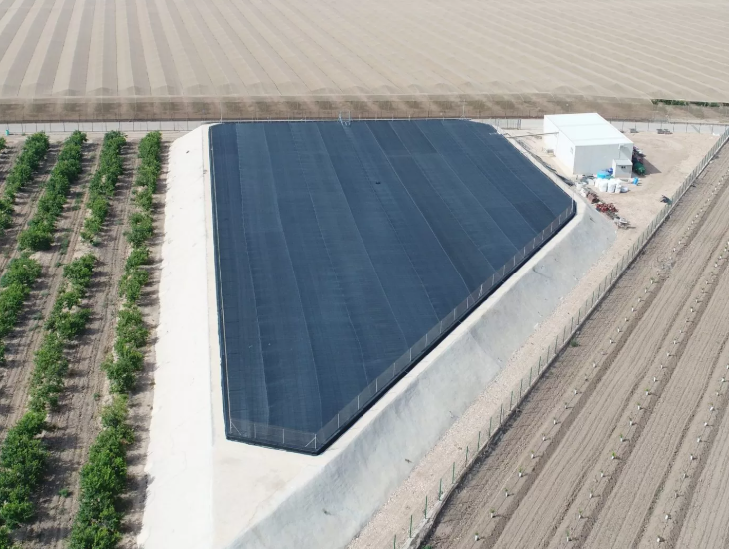
- Continuous membrane: close to 100% coverage. It follows the level only to a limited extent, rainwater must be pumped off, and it needs perimeter anchoring and often draining the pond.
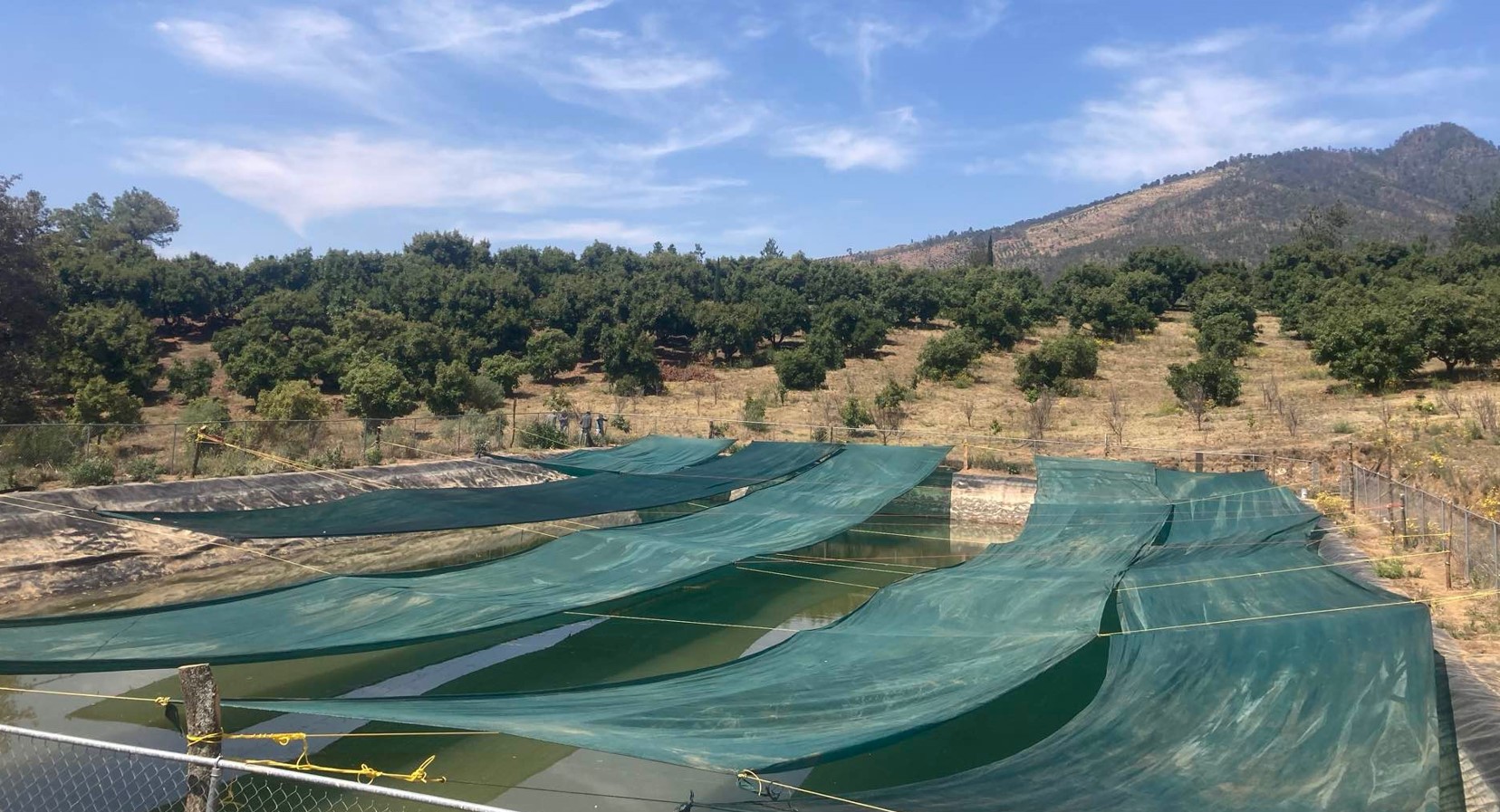
- Shade structure: shades the surface but does not seal it. Rain passes through, and it needs foundations and a structure.
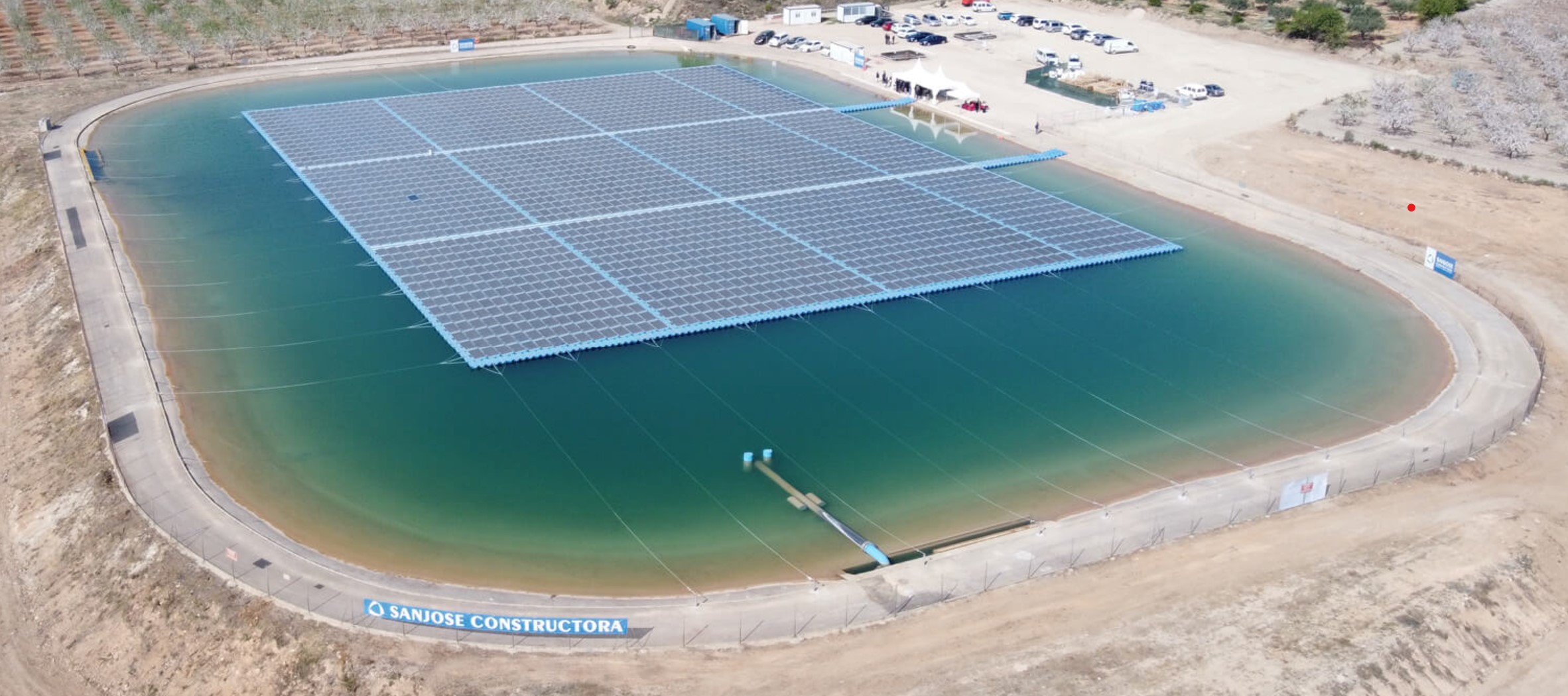
- Floating solar: partial coverage. It follows the level with anchoring, rain passes through, and it requires an engineered project.
For most irrigation ponds, a modular hexagonal cover offers the best balance: high coverage, no civil works, installation without stopping irrigation, and automatic adjustment as the pond empties through the season.
Step 4: Check seven technical criteria
1. Measured evaporation reduction
Ask for the measured reduction, not the geometric coverage, and how it was measured. Covex® reduces evaporation by up to 97% on full-scale ponds, calculated with a model validated by Eddy Covariance measurements.
2. Ballast
Units with sealed water ballast sit low and hold formation in wind. Light, unballasted units lift and pile up, leaving open water on the windiest and driest days.
3. Wind rating and freeboard
Ask for the wind resistance and how much of the unit sits above the water. Covex® XT50 is rated for wind up to 100 km/h with about 27 mm above the waterline; Covex® X50 for up to 80 km/h with about 31 mm.
4. Algae control
The cover has to block light, not just shade part of the surface. Covex® blocks the sunlight that drives photosynthesis and reduces algae growth by over 90%.
5. Material, UV protection and temperature range
Look for UV-stabilized HDPE with carbon black and a stated operating range. Covex® operates from -40 °C to 85 °C (ASTM D648).
6. Warranty and service life in writing
Ask for the warranty document. Covex® carries a 10-year warranty against manufacturing defects and an expected service life of more than 25 years.
7. Rain, maintenance and access
Rain should pass through the cover without pumping, the cover should need no maintenance, and you should be able to open a zone for a pump or sampling and close it again.
Step 5: Calculate the water you will recover
The basic calculation is simple:
Recovered water (m³/year) = surface (m²) × annual evaporation (m) × reduction (%)
For example, a 10,000 m² pond in Almería, Spain, evaporates around 1.85 m per year, about 18,500 m³. With a reduction of up to 97%, a cover can recover up to roughly 17,900 m³ per year. Around two thirds of that is recovered between May and September, when water is scarcest.
A precise figure needs climate data for the exact site, the pond geometry and its filling regime through the year. That is the number to use for an investment decision or a grant application.
Common mistakes to avoid
- Comparing suppliers on coverage instead of measured reduction.
- Choosing the cheapest unit per square meter without checking ballast and wind rating.
- Calculating the return only on the water price. In many regions the real constraint is the water allocation available in summer, not its price per m³.
- Accepting a warranty that is not in writing.
Frequently asked questions
How much does a floating cover reduce evaporation in an irrigation pond?
It depends on the cover. Ballasted modular hexagonal covers such as Covex® reduce evaporation by up to 97% with 98% of the surface covered. Floating balls cover about 91% of the surface and reduce it less.
Can a floating cover be installed without emptying the pond?
Yes. Modular covers are launched from the edge and spread out on their own, with no need to drain the pond or stop irrigation.
Does the cover keep working when the pond is low?
Yes. Modular units follow the water level and rearrange themselves as the pond empties and refills.
Are floating covers eligible for grants?
In many countries, including Spain, floating covers can fit as a water saving measure within irrigation modernization programs. Each call sets its own eligible items and requirements, so the technical report has to express savings in m³ and as a share of the allocation.
Next step
Send us the location and surface area of your pond. We will calculate its evaporation, the water a Covex® cover can recover and the payback for your site.
→ Floating covers for irrigation ponds in Spain
→ Floating covers for agriculture
→ Covex® technical specifications